


Fishing and recreation off the coast of Sunset Bay State Park in Coos Bay, OR. (Photo by: Sara Swett)
February 23, 2026
By Juliet Grable
Oregon Sea Grant is building on its long history of engaging coastal residents on new and potentially controversial energy proposals.
Twenty years ago, Kaety Jacobson, then an extension specialist with Oregon Sea Grant, developed a process that Oregon State University used to engage the many different groups who were concerned about an experimental wave energy testing facility the university wanted to install off the coast.
“It was a very bottom-up process, working with the fishing industry, the surfing community, Tribes, business owners, and the community at large to figure out the best place to put this thing,” says Jacobson.
Work groups with representatives from all the affected partners helped narrow down possible locations and contributed to the draft proposal for the PacWave testing facility. It was installed in 2025, about seven miles offshore from Newport, OR, and testing is expected to begin soon.
The PacWave experience offers valuable lessons. It also created a reservoir of earned trust.
“PacWave was perceived very positively by the coastal community because of how they were involved; the fishing communities were engaged and felt heard,” says Karina Nielsen, director of Oregon Sea Grant. In contrast, when the U.S. Bureau of Ocean Energy Management, or BOEM, announced Oregon’s two floating offshore wind leasing areas in early 2024 many coastal residents felt blindsided.
A spokesperson for commercial trawlers called it a “slap in the face.” A Tribal chair for the Confederated Tribes of the Coos, Lower Umpqua and Siuslaw Indians dubbed the potential installments “green colonialism.”
“We saw that coastal residents felt left out of the process, and because of our positive experience with PacWave and reputation as a neutral source of science-based information, we were in a good position to help,” says Nielsen. Oregon Sea Grant hired Sara Swett to engage coastal residents in learning more about offshore wind energy, the federal siting and leasing processes underway in Oregon, and opportunities for providing input.
“A big part of my job is meeting people where they are so people can get to know me and, hopefully, trust me as a source of credible information,” says Swett, whose graduate work focused on energy justice and community perceptions of offshore wind energy development in the Northeast United States.
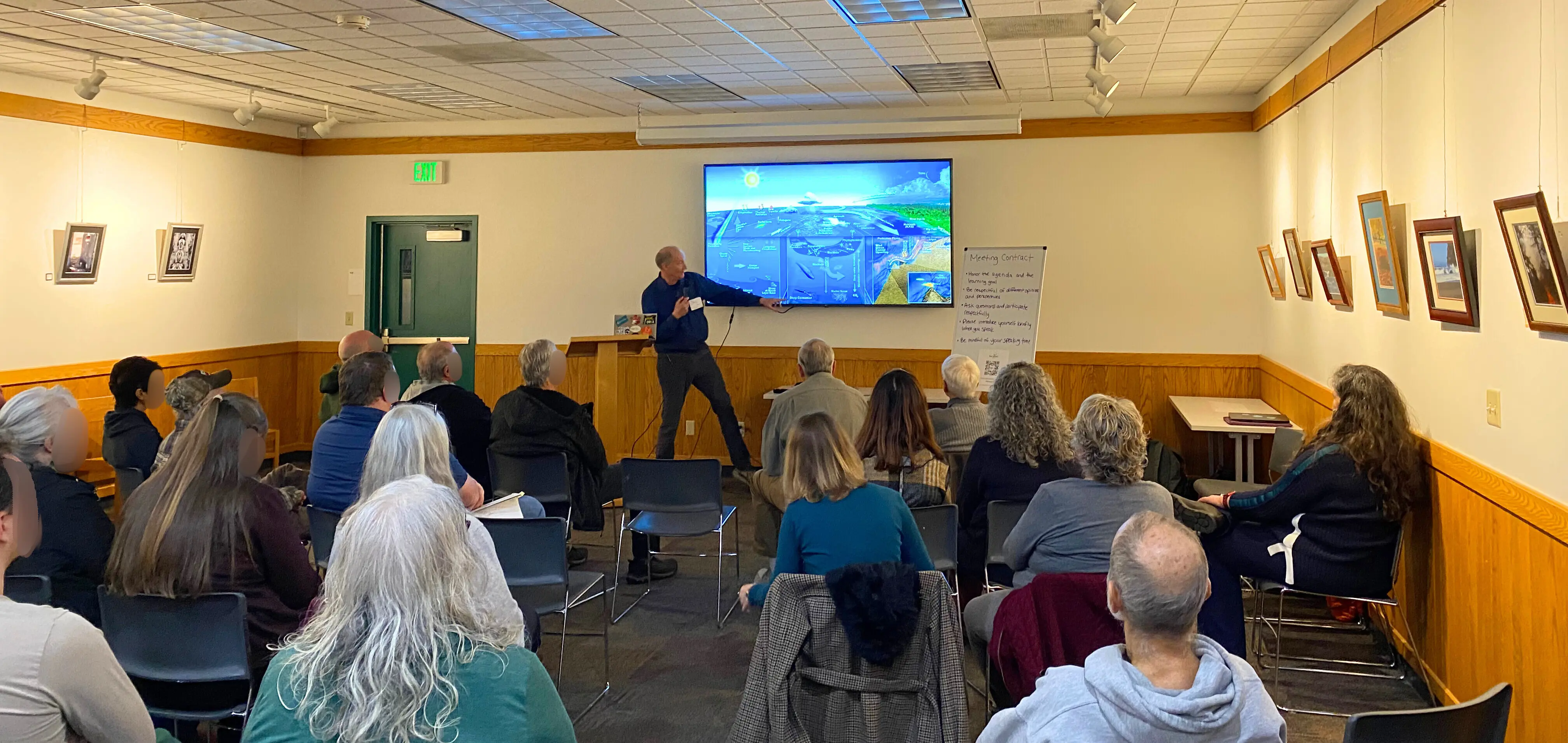
“Trust is built on relationships between individuals, not institutions,” says Nielsen. “Even as funding and administrations change, maintaining trusted relationships with the communities we serve is an important part of our work.”
One of Swett’s first tasks was to conduct a needs assessment to identify affected groups and learn what questions and concerns coastal residents have. She has heard from residents from across the spectrum. Some are firmly opposed to offshore wind energy; some support responsible development; and some are curious to learn more.
Floating offshore wind is new technology, and new to the West Coast. The concerns Oregon residents express are similar to those Swett noted in East Coast communities as they confronted new fixed-bottom installation proposals there. Fishermen fear they will lose access to fishing grounds, while tribes and other coastal residents worry about environmental impact, altered views, and effects on cultural resources. Misinformation, spread swiftly online, only heightens the confusion.

Ironically, mistrust makes people more reluctant to participate in the public process, says Swett. “They feel it’s a waste of time, that they’re being listened to but not being heard,” says Swett.
Oregon Sea Grant maintains a trove of online resources, including virtual webinars and web pages dedicated to learning about a variety of ocean renewable energy technologies including floating offshore wind. Swett and Nielsen are also active in the policy space, serving on several committees and attending regional meetings related to offshore wind.
“We’re there to track, listen, and contribute good information,” says Nielsen. “It’s important to participate so people on all sides of the issue know we’re engaged and serving as a neutral and credible resource.”
In September of 2024, BOEM postponed Oregon’s floating offshore wind auction, due to the lack of competitive interest in bidding from the industry. At the same time, Oregon Governor Tina Kotek pulled Oregon out of BOEM’s Intergovernmental Renewable Energy Task Force to protect Oregon’s interests and give the state more time to complete its Offshore Wind Energy Roadmap. The Roadmap, mandated by Oregon’s legislature (HB 4080 2024) and developed with key constituencies and the public, is intended to provide a “comprehensive vision and practical guidelines” for how Oregon might incorporate offshore wind energy.
In January of 2025, the new federal administration placed a moratorium on all new offshore wind development in the United States, and in July, BOEM rescinded the wind energy areas they had identified off the Oregon coast. Despite the about-face in federal policy, the Department of Land Conservation and Development, or DLCD, moved forward with the Roadmap, as charged by the Oregon Legislature, to help prepare the state for a future that may, or may not, include some form of offshore wind.
As part of the Roadmap process, DLCD has been working with Oregon Sea Grant to disseminate information and gather perspectives.
“When it comes to extension [engaging communities] on the coast, Sea Grant has people who actually walk the docks and have those relationships,” says Jeff Burright, DLCD’s Offshore Wind Energy Roadmap Coordinator.
Swett planned a series of Roadmap "lunch and learn" presentations, where people could connect with subject matter experts on relevant topics such as transmission planning and energy resilience.
Swett and Tanner Etherton, extension specialist at California Sea Grant, also worked with National Sea Grant’s energy liaison to bring Burright to Rhode Island for an East Coast-West Coast knowledge exchange with fishermen and policymakers.
“The fishermen we talked with in Rhode Island at the knowledge exchange advised us not to drop our engagement work on offshore wind, but to take advantage of this pause," says Swett. "They saw the offshore wind industry come back to the Northeast, eventually, despite earlier pauses.”
The Scientific and Technical Advisory Committee for the Oregon Ocean Policy Advisory Council, which Nielsen chairs, was charged with summarizing available research, identifying knowledge gaps, and developing a method to prioritize research needs that should be addressed.
“Oregon has a wealth of university researchers knowledgeable about our local ocean environment, coastal communities and economies, ocean energy and engineering, and other relevant topics,” says Nielsen, who also serves on the diverse 50-member advisory committee that is guiding the Roadmap’s development. “It’s important for Oregonians to have the benefit of scientific and technical expertise to inform policy, together with other knowledge holders." The report will be included as part of Oregon’s Offshore Wind Roadmap.
In November, Oregon Sea Grant hosted a public event in Coos Bay. It was originally focused on offshore wind, but after conversations with different partner groups, “it became very clear that what the community wanted was a conversation on port development,” says Swett. The Oregon International Port of Coos Bay is planning to revitalize the Port with a new intermodal port and container terminal.
A panel of community leaders from Northern California’s Humboldt Bay region, where floating offshore wind energy projects and port development are being planned, led the discussion.
“I've already had really good feedback about how [events like these] are helping people in Coos Bay prepare, not just for offshore wind development, but any form of coastal or port development,” says Swett. Since the presentation, conversations between community members and leadership of the Port of Coos Bay have led the Port to explore new pathways for incorporating community and Tribal input into their operations. Now, she is working with Etherton to bring fishermen, Tribal members, and community residents from Oregon to Humboldt County for a similar learning exchange there.
Oregon Sea Grant will continue engaging with coastal residents, helping them prepare and respond to new proposals and technologies that could impact their communities.