


Mason Shannon's Research with Solid Carbon Inc.
Industry: Chemical Manufacturing
Project Type: Tool that assists the development of a net carbon-negative concrete product.
Location: McMinnville, OR
Major/University: B.S. Forest Engineering, Oregon State University
Summary
Solid Carbon Inc., a startup based in McMinnville, Oregon, is developing concrete that captures and stores atmospheric carbon — turning a major source of emissions into a tool for climate action. To further lower the carbon footprint of its production process, the company is exploring key improvements: sourcing materials locally to reduce transportation emissions, creating a closed-loop system that recycles heat from pyrolysis, and adding a rail line to move materials more efficiently. These steps aim to cut energy use, lower emissions, and support a more sustainable building industry.
Company Background

Founded in 2022 in McMinnville, Oregon, Solid Carbon Inc. is a small, owner-operated company developing net-negative carbon concrete. With a team of eight, the company is committed to ethical practices, strong partnerships, and innovation. Solid Carbon aims to lead the concrete industry in sustainability while proving its product matches or exceeds the performance of traditional concrete
Project Description
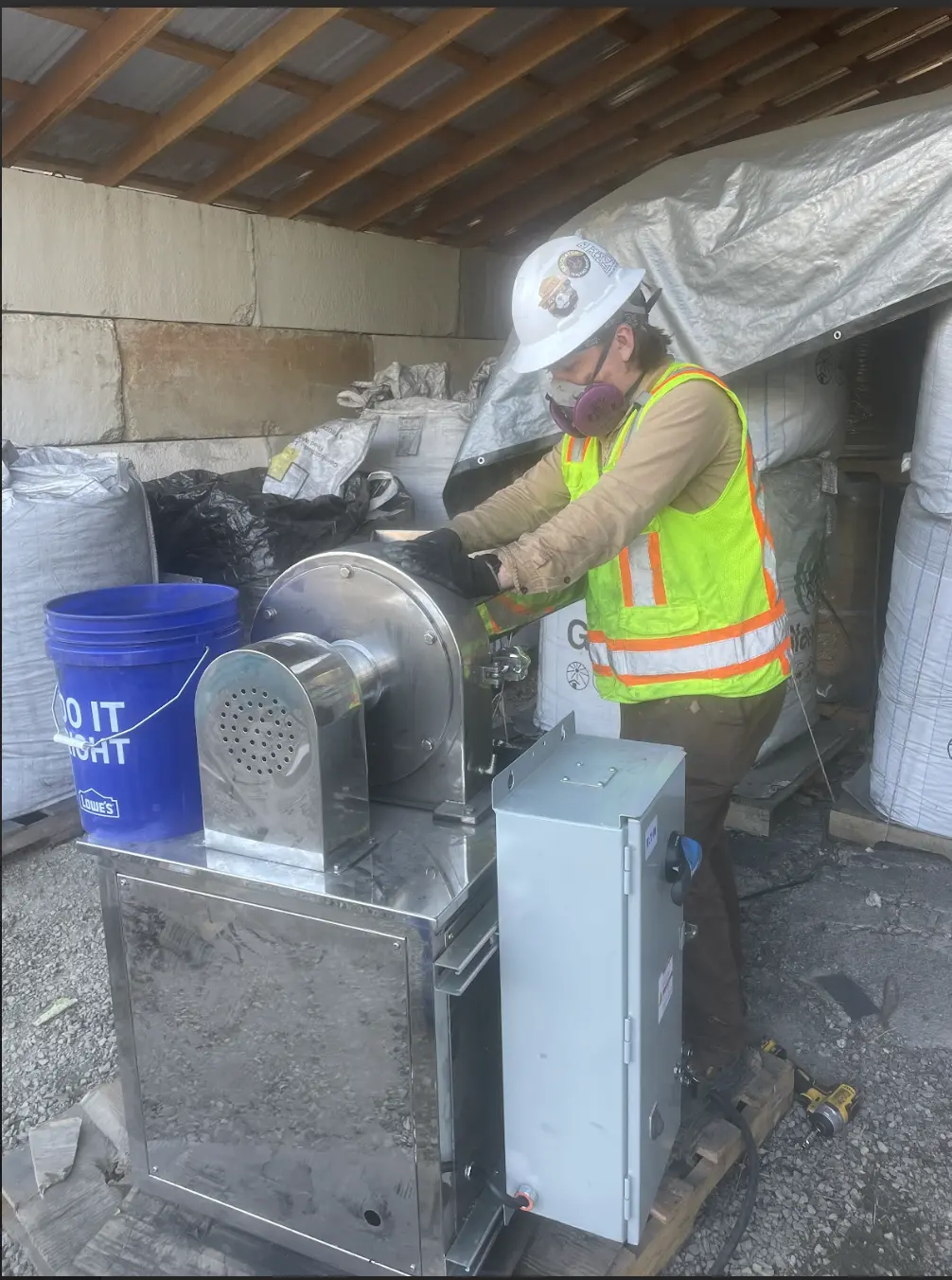
To help reduce emissions in concrete production, Mason developed a Goal & Scope for a Life Cycle Assessment (LCA) focused on capturing carbon from forests and storing it in concrete. They collaborated with the research team to gather data, observe processing operations, and explore alternatives to cement-based materials. Their pollution prevention recommendations included shortening travel distances, recycling pyrolysis heat, and using rail transport to lower the product’s Global Warming Potential (GWP). The intern also contributed to lab work, capacity building, and partnered with Wilsonville Concrete Products on material handling, while creating an LCA framework to guide future improvements.
Estimated Annual Reductions
Mason's recommendations could have the following annual impacts:
47,000 lbs
Reduced CO2 Emissions
$10,000
Savings