

A Work-Ready Training Program
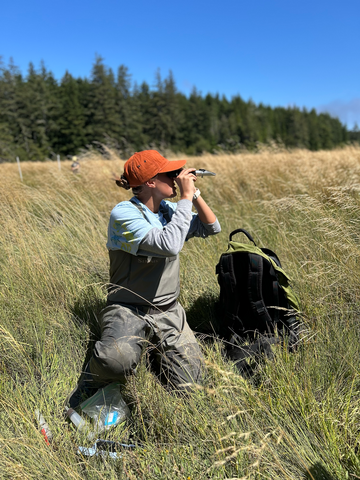
The Summer Scholars Program is a paid 10-week program that places undergraduate students from around the country with a variety of Oregon-based host organizations (tribal, public agency, non-profit, non-governmental).
The program provides a diversity of students with hands-on experience under the mentorship of a career professional. Scholars can assist host agencies with field work, lab work, analysis, research, policy development, and outreach and public engagement efforts.
The goal of the Oregon Sea Grant Summer Scholars Program is to contribute to a diverse ocean workforce that understands the technical and social challenges facing coastal communities and the natural environment. In addition, the program helps prepare undergraduate students for graduate school and careers in marine science, policy, management and outreach.
Please review the "How to Apply" section of this website and the Application Resources page for more information about how to assemble a strong application. In addition, you may reach out to Blaine Schoolfield with questions.
How to Apply
We are currently accepting applications for our 2026 Summer Scholars cohort. Applications must be submitted by February 16th, 2026 at 11:30 pm PST. Please refer to the 2026 application link below for detailed instructions on how to apply, and to the second link below for a complete list of 2026 hosts, site locations and projects.
To receive announcements about upcoming internship opportunities and application workshops, we encourage you to sign up for our Fellowship listserv.
Additional resources from past cohorts and further details about the 2026 application process are provided below.
2026 Summer Scholars application
List of 2026 hosts, locations and projects
Summer 2025 Final Symposium talks
Summer 2024 Final Symposium talks
No letters of recommendation are required. Any undergraduate student currently enrolled in any U.S. college or university (or who will have graduated during the 2025-2026 academic year) may apply.
Interested in Becoming a Host?
Reach out to Blaine Schoolfield with questions, or to request more information.
Here's a video that provides an overview of what the Summer Scholars Program is all about:
Meet the 2026 Scholars
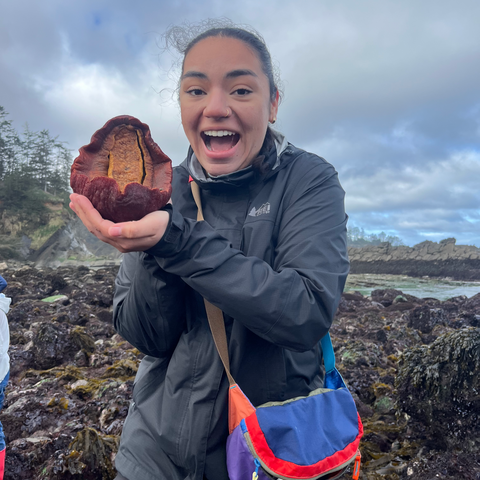
Alex Thorne
This summer, Alex will be working with the Oregon Coastal and Ocean Information Network (OCOIN). OCOIN is an organization dedicated to fostering science-informed decision making by easing the accessibility and availability of research being done across the Oregon coast. Alex hopes to use creative outreach and stakeholder engagement methods to maintain and expand the online OCOIN network while also building her knowledge of information/data science.
Alex will be graduating from the University of Oregon in Spring of 2026 as a Marine Biology major with minors in Science Communication and Sustainable Business. The interdisciplinary curriculum allowed her to engage with a wide array of perspectives on environmental topics, and revealed a deeper passion for increasing science accessibility and improving science communication techniques. In the fall, Alex will pursue a masters degree in conservation and restoration science to help better inform coastal management and policy decisions.
Throughout her undergraduate experience, Alex was able to participate in research on various levels of marine organisms from unknown anemones to endangered fish species. Studying the Pacific Northwest showed her how restoration and conservation are not only scientific practices, but rather cultural, historical, and economically informed processes that affect incredibly widespread networks of animal, environmental, and human relationships. As she moves further in her career, Alex plans to generate a space where cultural perspectives enrich marine science, empower communities to engage in resource stewardship, and ensure diverse voices are valued in shaping sustainable solutions.
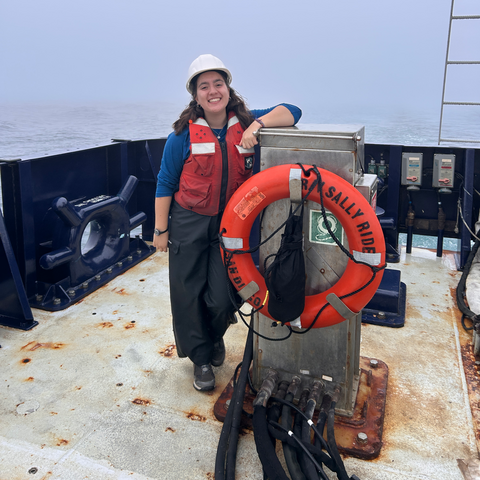
Tess Hoffman
This summer, Tess has the amazing opportunity to work with the Oregon Sea Grant Marine Education team! The Oregon Sea Grant Marine Education Program creates experiential learning opportunities for the local community to encourage a sense of connection to the environment. This summer, she hopes to aid the team in the facilitation of summer education programming and exhibit interpretation at the Hatfield Marine Science Center.
Tess is currently a senior working towards finishing two bachelor's degrees in Oceanography and Science Education, with a minor in Geology at Oregon State University. In her time at OSU, she has worked as a research assistant in the Coastal and Fluvial Sediment Dynamics Lab on multiple projects regarding coastal dynamics and sediment movement in polar regions. Tess has been fortunate enough to participate in multiple field work opportunities, including time spent in Utqiagvik, Alaska and on the R/V Sally Ride. In addition to her science background, Tess has worked as an Academic Learning Assistant to aid first-year college students in adjusting to university-level academics, as well as volunteered with local K-12 ocean education outreach events.
Tess is a passionate science communicator and educator, emphasizing the importance of hands-on science experiences in her teaching philosophy. She has an interest in incorporating applied science in K-12 classrooms and approaching science teaching with an observation and inquiry-based approach. She believes that science is way more fun when you can actually see what is happening! While she is currently transitioning to a more education-focused path, the majority of her research in her undergraduate career has involved coastal dynamics, particularly the chemical and physical interactions of water and sediment within coastal environments.
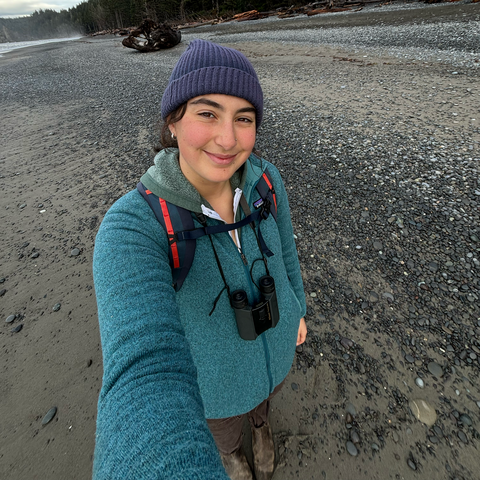
Ava Vaughan
Ava will be working with the Oregon Department of Fish and Wildlife to investigate potential pathways for increasing public engagement within the Marine Reserve Program. She is excited about the opportunity to collaborate with a variety of stakeholders and expand the program’s accessibility.
Ava grew up on the Olympic Peninsula of Washington and recently graduated from the University of Washington with a dual degree in Environmental Studies and Business Administration, as well as a minor in Nutrition. During her time in Seattle, she was active in a number of organizations, serving as President of Net Impact, Undergraduate Representative on the Population Health Initiative, Presidential Scholar, UWild Field Guide, Climbing Club Staff Member, and Student Farm Club Volunteer.
Ava's is particularly interested in exploring the socioecological model and the intersection between natural resource management, population health, economic development, and community resilience. Her past work includes a yearlong project examining social vulnerability and community engagement in a coastal emergency management setting in collaboration with Washington Sea Grant and the Washington State Emergency Management Division. In addition to coastal resilience work, Ava is passionate about outdoor accessibility, corporate environmental governance, and sustainable food systems.
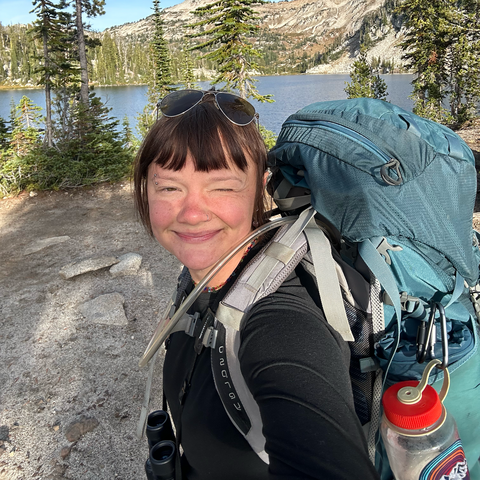
Beatrice Larson
Beatrice is excited to be a part of the Summer Scholars Program with Oregon Coastal and Ocean Information Network. She will be helping to maintain and expand the current network of coastal research while using GIS software to build a geo-spatial index that can be applied across projects within OCOIN.
Beatrice graduated from Portland State University in June of 2026 with a Bachelor of Science in Environmental Science and a minor in Geographic Information Systems (GIS), just before starting her position with Oregon Sea Grant. Her education has been broadly focused on marine ecology, ornithology, invasive species management, and GIS analysis. Beatrice had the opportunity to conduct research into Harvest Incentive Programs (HIPs) for invasive species management during her final two years of undergrad, with this research now awaiting publication.
Beatrice loves ornithology, GIS, and marine ecology, as professional passions and as daily interests. Her research as an undergrad has led her to a great passion for enhancing community engagement in management decisions and processes. Beatrice is excited for a career that combines ecology and research with community engagement, and for exploring how GIS software can support research in ecology and conservation.
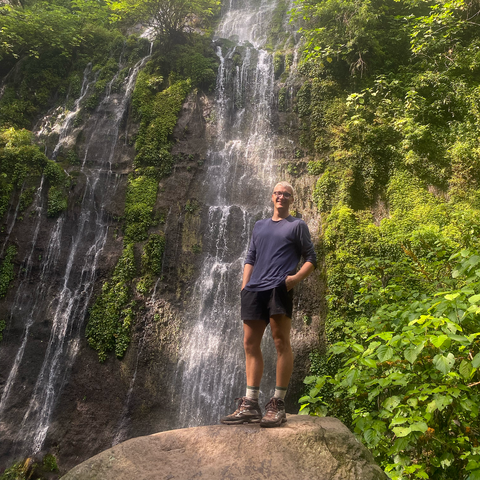
Stephen Ero
Stephen’s International Coastal Atlas Network (ICAN) scholar placement focuses on supporting community-centered environmental planning and resources management initiatives. He anticipates contributing to projects that integrate spatial analysis with stakeholder engagement, with emphasis on improving accessibility and communication of environmental data. Through this work, Stephen aims to strengthen his GIS, policy analysis, and international collaboration skills.
Stephen completed his undergraduate degree in public policy at OSU in June of 2026. He originally came to OSU as an environmental engineer and completed three years of said program before switching to policy studies. Since switching, Stephen has also enrolled in an accelerated master's degree in environmental policy at OSU, with a graduation date set for 2027.
Stephen’s professional and research interests lie at the intersection of his STEM background and environmental policy. He is interested in how policy decisions impact global communities differently, and how technology generates policy windows which can be leveraged to support global environmental justice and sustainability. Moving forward, he hopes to engage in work that bridges technical analysis with community focused solutions. He is particularly drawn to roles that combine research, policy, and applied problem-solving.
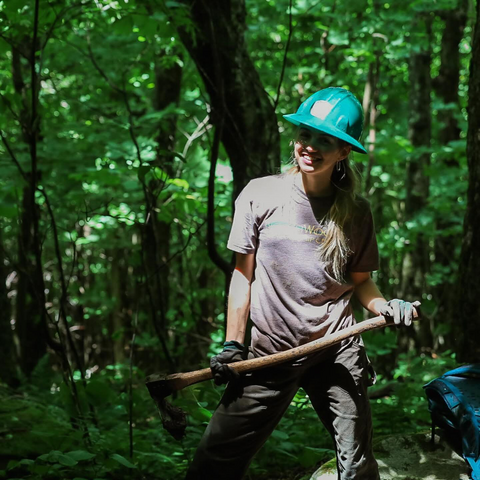
Lola Davis
This summer, Lola has been selected to join the South Slough National Estuarine Research Reserve as an Environmental Educator and Social Science project researcher. In this role, Lola will support the reserve’s mission by enhancing local estuary knowledge, engaging community members through education, and contributing to social science research that informs inclusive and effective coastal conservation efforts.
Her academic experience was shaped by a wide range of internships, leadership roles, and community engagement opportunities pursued alongside coursework. Some of which included pollinator ecology research in Texas prairies, serving as Internal Director of the Campus Environmental Center, organizing bi-monthly on-campus farmers markets, working as a Restoration Ecology technician in urban riparian zones, expanding access to environmental careers for Title I high school students, Conservation Corps, and more. Together, these roles strengthened her passion for environmental science grounded in interdisciplinary, community-centered approaches.
As a recent graduate of Geography and Sustainability Studies at University of Texas at Austin, Lola is excited to pursue opportunities that prioritize field-based ecological research and community engagement. She is driven to contribute to research that centers adaptive solutions to rapidly changing ecological challenges while also honoring the human dimension of conservation work. Whether that means working in the field, in education, or alongside local communities, she wants her work to be rooted in reciprocity, inclusion, and long-term sustainability.
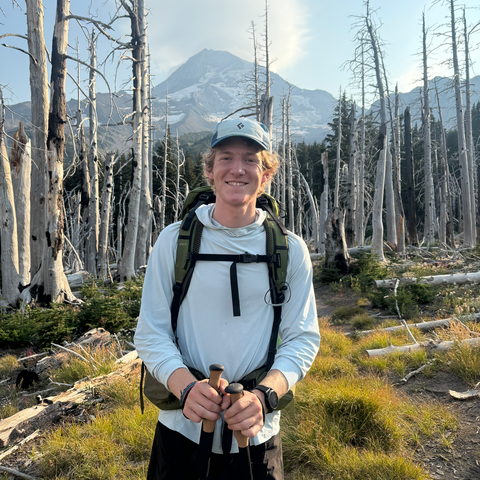
Emmett Elsom
Emmett will be spending the summer of 2026 working with the Oregon Department of Fish and Wildlife on the ongoing Shellfish and Estuarine Assessment of Coastal Oregon (SEACOR). He will collect population and habitat data on several shellfish species, contributing to the study and management of Oregon's estuarine shellfish populations. Emmett also looks forward to the opportunity to contribute to remote-sensing based eelgrass mapping, as well as community outreach efforts.
Emmett is currently pursuing a B.S. in Environmental Science at Western Washington University, with an additional emphasis on Environmental Toxicology and Geographic Information Systems (GIS). In 2024, studying abroad in Nepal gave him a chance to learn how resources are managed in a very different societal and cultural context, broadening his perspective on how future sustainable resource use could be conducted in the United States and elsewhere. In the summer of 2025, he worked as a field scientist with the North Cascades Glacier Climate Project, documenting the annual mass balance of ten North Cascades glaciers and gaining experience with fieldwork and numerous data collection techniques. Emmett’s undergraduate education has centered around water resources, and has naturally drawn him towards watershed and fisheries science, a major intersection between ecological function and human activity.
In his undergraduate degree and beyond, Emmett hopes to work on improving the human-ecosystem relationship. The management of fishery resources is a historically challenging and high-stakes practice, and he’s excited to contribute to our understanding of the ecosystem interactions downstream of commercial and recreational fishing activities. As an environmental scientist, he believes that his interdisciplinary skillset in spatial analysis and ecosystem function will enable him to make meaningful contributions to fisheries science, helping us to utilize existing marine resources while preserving those ecosystem services for generations to come.
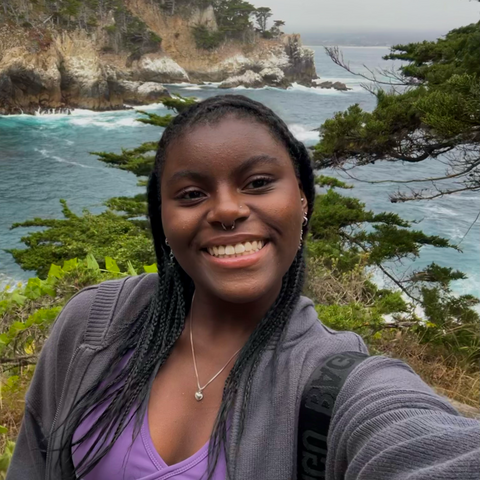
Janiya Kitcher
This summer, Janiya will be working with the Oregon Sea Grant (ORSG) marine education program at the Hatfield Marine Science Center. She will assist with delivering educational programming for youth camps and general visitors to the center. Within this role, she looks forward to helping others learn about, connect to, and engage with our marine ecosystems.
Janiya will be graduating this spring from UC San Diego with a B.S. in Environmental Systems with a focus on Ecology, Behavior, and Evolution. She’s been lucky to have an interdisciplinary education, offering her a strong background in both terrestrial and marine environments. Outside the classroom, Janiya has had the opportunity to serve as a TA for biology courses, work in education at Birch Aquarium, and perform outreach with the UC San Diego Natural Reserves System. These experiences have shaped her passion for inclusive science education and given her the chance to work directly with diverse communities. She is excited to continue this work as a Summer Scholar!
Janiya’s professional and research interests are centered on the ways BIPOC (Black, Indigenous, and other people of color) communities interact with environmental science, especially marine science. BIPOC are traditionally underrepresented in environmental science and conservation, leading to a lack of inclusion, involvement, and knowledge. More specifically, she is interested in how education can serve as a pathway to increase community engagement in conservation and how this participation may affect conservation outcomes. She is currently working on this as part of her senior capstone project, which focuses on the impact of language-diverse materials in marine education settings.
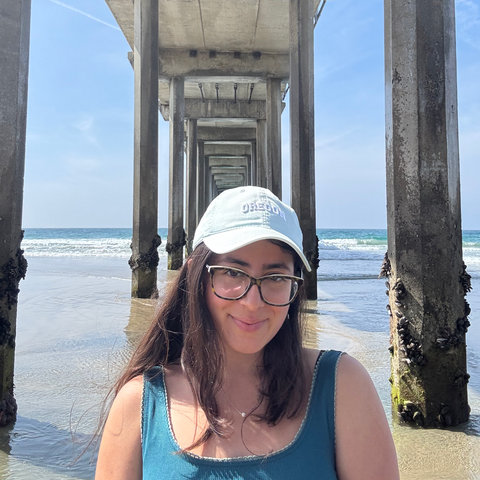
Evelyn Gomez
This summer, Evelyn will be placed with the USDA Pacific Shellfish Research Unit in Newport, where she will contribute to the Pacific Oyster Genomic Selection project, a breeding program designed to support shellfish aquaculture and improve oyster resilience along the U.S. Pacific coast. As part of the fellowship, she will gain experience in oyster hatchery operations, shellfish husbandry, and estuarine field ecology while learning how aquaculture research can inform both industry practices and ecosystem management. Evelyn hopes to use this opportunity to strengthen her technical research skills and deepen her understanding of applied marine science, particularly in areas related to species restoration, coastal habitats, and environmental resilience.
Evelyn is currently pursuing a Bachelor of Science in Marine Biology at the Scripps Institution of Oceanography at the University of California San Diego, where she has developed a strong interest in marine ecology, restoration, and organismal responses to environmental change. A major part of her undergraduate experience has been her work in the Smith Lab, where she contributes to research examining coral recruitment, benthic community composition, and carbonate accretion in restoration treatments at Palmyra Atoll. Through the Smith Lab, Evelyn has also expanded her interest in phycology and collection-based research, and is helping curate and digitize marine algal herbarium specimens.
Her interests focus on how ocean acidification and other environmental stressors influence marine organisms, species interactions, and ecosystem resilience. She is particularly interested in how species restoration can contribute to broader habitat restoration and support the recovery of degraded coastal ecosystems. Evelyn is drawn to research that links organismal biology with ecological change, especially in systems undergoing environmental stress and recovery. In the future, she hopes to contribute to marine science research that advances conservation, restoration, and long-term ecosystem sustainability.
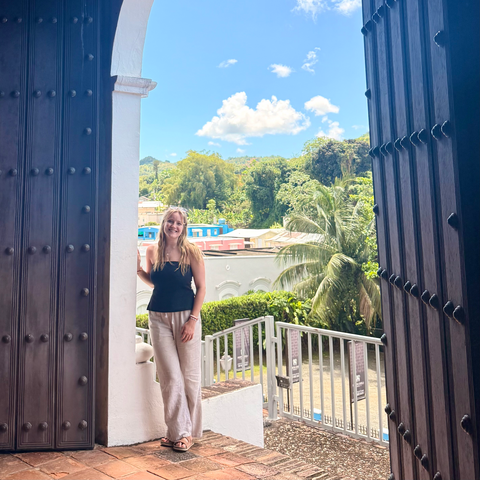
Andrea Kloess
This summer, Andrea will be placed with the Port of Port Orford in an applied research and project support role which focuses on permitting and stormwater management. This involves supporting permitting for their Supplemental Seawater Delivery System across multiple agencies like the Army Corps of Engineers, Oregon Department of State Lands, and Oregon Department of Environmental Quality. In addition, she will help update the Port's Stormwater Pollution Control Plan through infrastructure mapping, pollutant source identification, and drafting recommendations for the Port staff.
Andrea is graduating from Oregon State University in June 2026 with a B.S. in Environmental Science and a GIS certificate. Her studies have combined both the technical and human dimensions of environmental work, with a focus on management, economics and policy, and sustainability assessment. Through her GIS coursework, she has developed skills in spatial analysis, coding, and mapping. Andrea has been able to apply these learnings as an undergraduate research assistant at the Ecohydrology Lab to support water resources and rangeland research.
Her professional goals are to work at the intersection of communities and the environment, supporting local governments and agencies as they navigate the growing challenges of climate change. She is especially interested in coastal communities and working landscapes, where these impacts are most strongly felt, and where thoughtful management and stakeholder engagement can make meaningful differences. After graduating, Andrea plans to gain experience in environmental planning, monitoring, or consulting, before pursuing graduate school.
Past Scholars
- Jonathan Brooks
- Cady Shaw
- Sophia Raya
- Madeline Young
- Jacynda Fernandez
- Elijah Felde
- Marquesa Calderon
- Alexis Merker
- Catelyn Toney
2024 Sea Grant Summer Scholars
- Arianna Arellano
- Destiny Coleman
- Linnea Gebauer
- Rana Almassmoum
- Samantha Dillard
- Isaac Olson
2023 Sea Grant Summer Scholars
- Walter Avila
- Maia Norton
- Sadie Horner
- Russell Van Duyne
- Taylor Cockrell
- Aiden Rooney
- Lauren Rice
- Genie Springer
- Tate Scarpaci
- Caroline Rice
- Sof Fox
- Connor Gonzales
- Louli Ziels
2022 Sea Grant Summer Scholars
- Alex Ang
- Brook Ashcraft
- Emma Chesley
- Jaime Gutierrez
- Matthew Jack
- Lauren Rice
- Chance Rueppel
- Sophie Truempi
- Louli Ziels
- April Jordan
- Armand Martinez
- Star Campos Garcia
2021 Sea Grant Summer Scholars
- Joshua Fackrell
- Charlotte Klein
- Phoenix McFarlane
- Lisette Perez
- Jessica French
- Andrea Vega
- Amishi Singh
- Grace Roa
- Mikayla Reuter
- Yalin Li
- Lucas Parvin