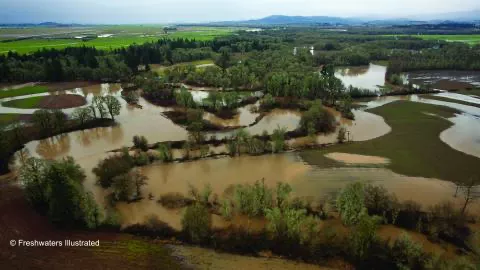
Willamette River floodplain during a winter flood.
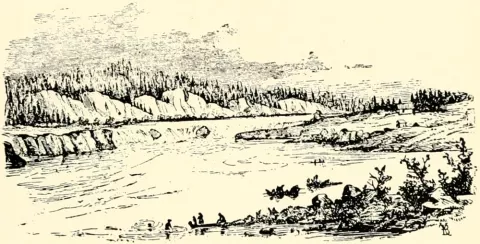
A drawing of Willamette Falls and native Americans on boats and fishing on the shore.
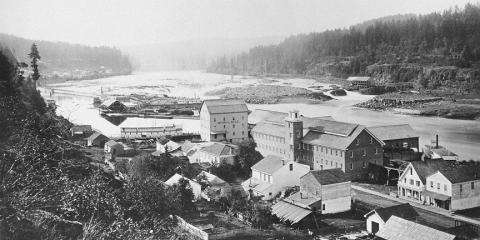
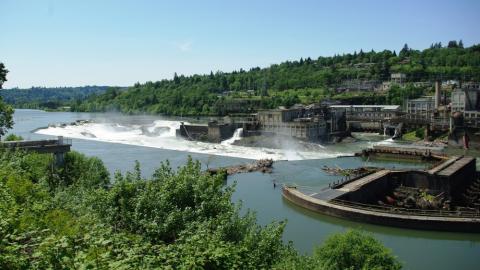
Oregon City and Willamette Falls 1867.
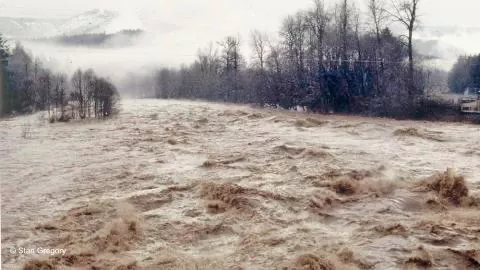
The Willamette River 1996 flood (photo Stan Gregory).
Rivers are in a constant state of change
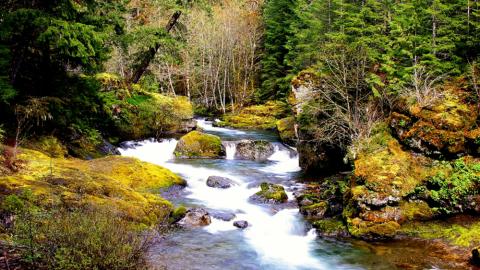
Their channels and floodplains are continually altered by natural processes. The Willamette River’s characteristic high winter flows come from western Oregon’s rainy winters and low summer flows come from dry summer. During naturally occurring high-flow events, the floodplain is inundated by rising waters that fill sloughs, creeks, ditches, and depressions, and also flood riparian woodlands and farm fields.
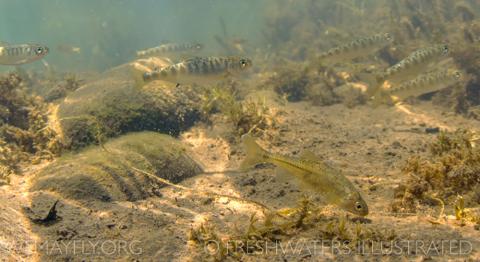
With the water come many fishes and other aquatic life that move with the river’s rising waters into these seasonal floodplain habitats to feed, reproduce, and seek refuge from the turbulent flows in the main river channel. The Willamette River has a legacy of past and continuing threats that have become increasingly apparent in recent years making it critical to recognize cumulative effects when considering Willamette River fishes.
Download a map of the Willamette Basin, Oregon.
Humans and the Willamette River
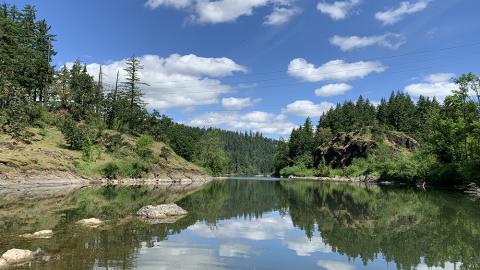
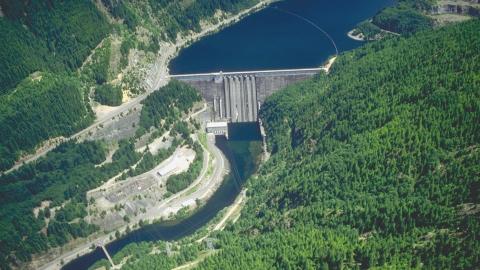
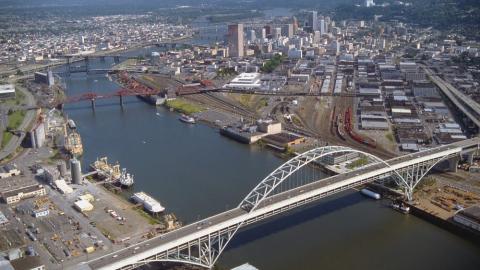
Indigenous people have stewarded and called the Willamette River and its valley since time immemorial, including the Kalapuya, Molalla, and Chinook peoples. Since the mid-1800s, new inhabitants have altered the Willamette River, its floodplain, and its tributaries to meet their needs for river navigation, forest management, flood control, industry, agriculture, and urban development invariably contributing to degraded conditions.
Newer threats from nonnative fish, land use activities, and climate change, have emerged in recent decades. Nonnative fishes were introduced starting in the late 1800s into the Willamette River basin, mostly from the eastern United States, though some came from as far away as Asia, which are harmful because they prey on native fish, compete with them for food and refuge, and can degrade water quality.
Increasing human populations and related urbanization of landscapes in the Willamette Valley affect aquatic habitats and fishes as distributions of people and the river, its floodplains, and tributaries increasingly overlap. Climate change is altering freshwater conditions and fishes in the Willamette River owing to changing fire, precipitation, flow, and temperature regimes.
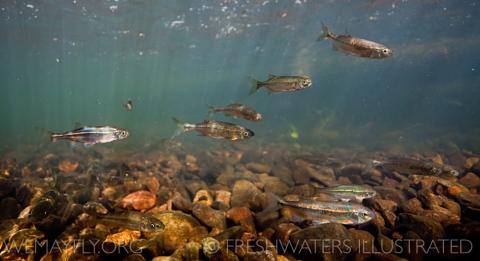
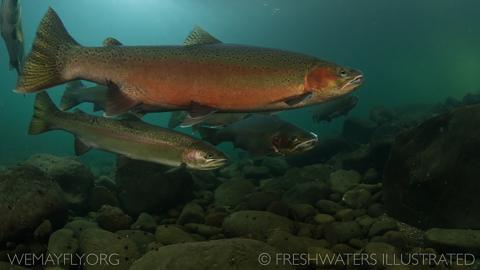
Willamette River Fishes
Although 69 species have been attributed to the Willamette River, the most recent decadal inventory of the mainstem captured 41 species, including 22 native fishes and 19 nonnatives.
While the number of species (species richness) is about equal for native and nonnative fish, the relative abundance is drastically different with more native fishes throughout the basin especially upriver. Identifying fish species increases our understanding of how fish use seasonal watercourses in the floodplain. Improving our understanding helps us sustain these Willamette Valley aquatic habitats for the mutual benefit of human and aquatic life.