

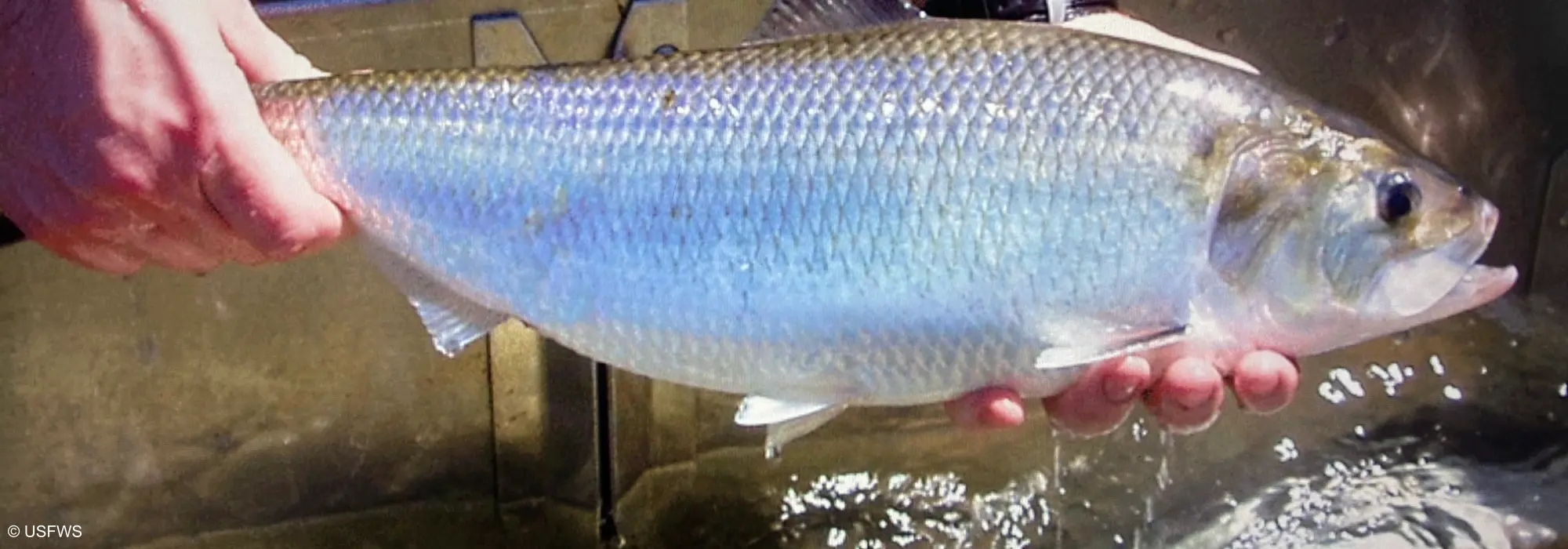
American Shad Alosa sapidissima
> American Shad are an anadromous species, meaning they migrate from the ocean to freshwater rivers to spawn.
> They are the largest member of the herring family, Clupeidae.
> Their spawning runs support commercial and recreational fisheries on the east coast of North America,where they played a significant role in the diet and economy of Native American tribes.
> American Shad populations have declined on the Atlantic Coast and are a major conservation concern.
> American Shad a nonnative in the western United States. They first migrated into the Columbia River in 1875 after being introduced into the Sacramento River in 1871 from the Hudson River.
> The U.S. government transplanted Shad into the Willamette River and the Columbia River twice in the 1980s and no other introductions have occurred
> Almost 8 million American Shad returned to the Columbia River in 2019, and they are now more abundant than all anadromous fish species returning to the Columbia.
Identification Tips
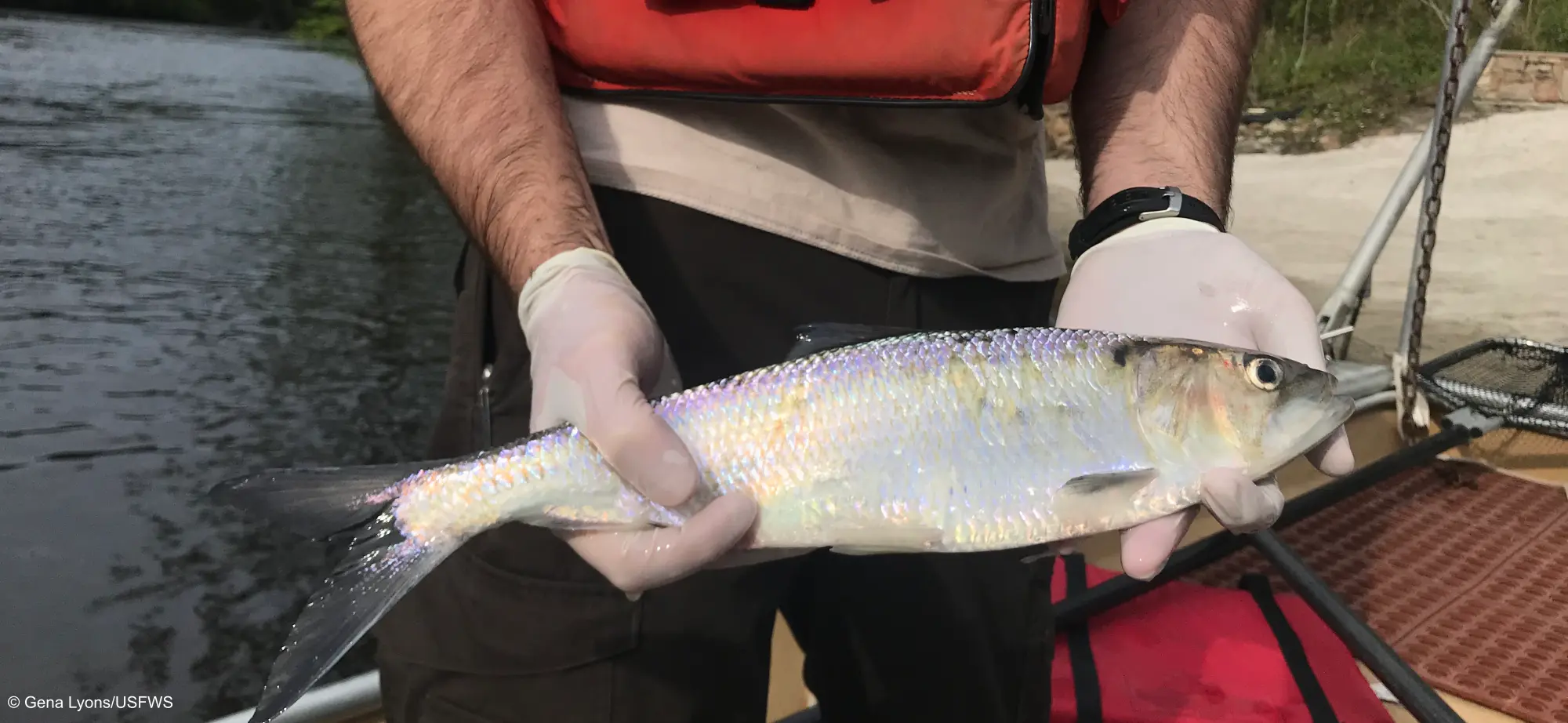
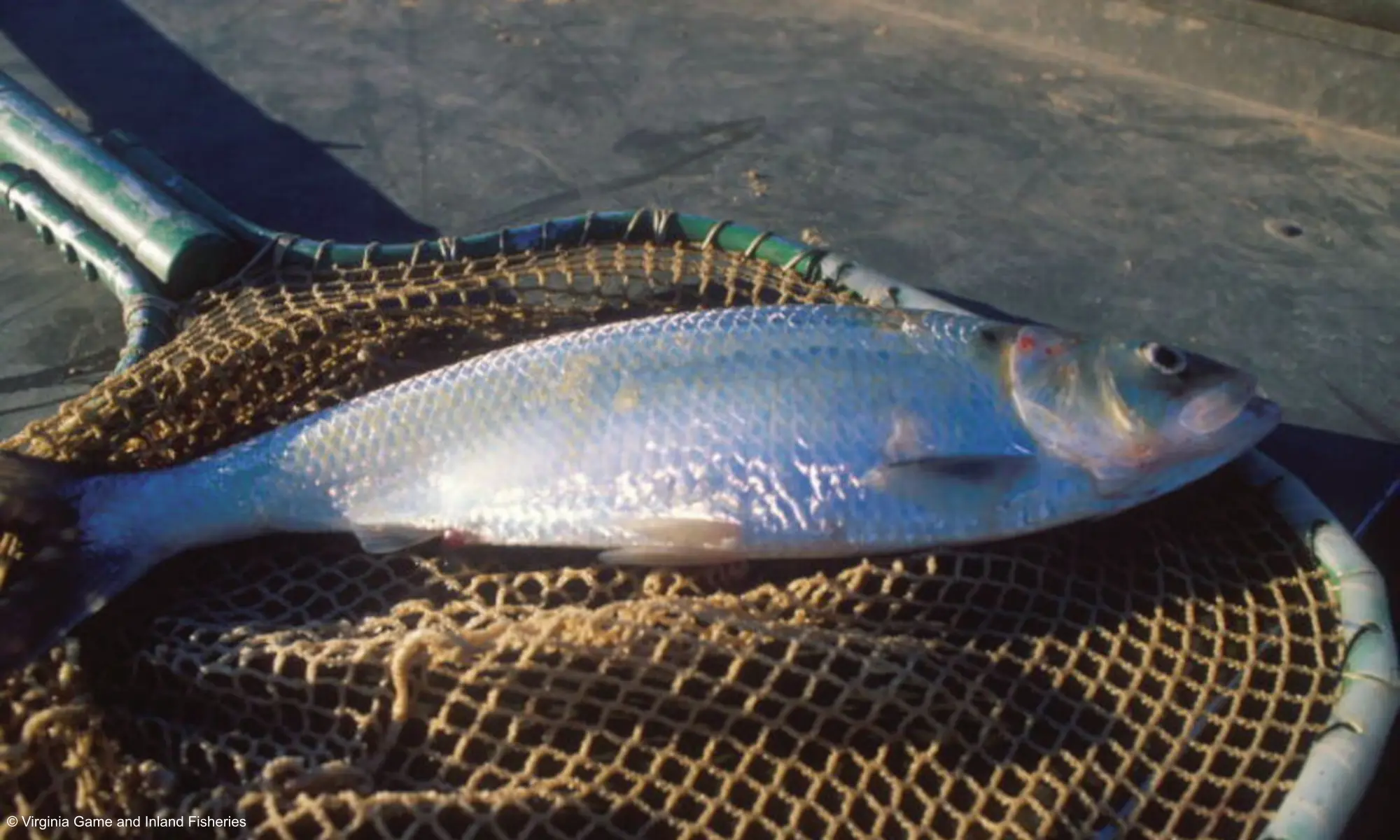
> American Shad have a deep, laterally compressed body with a silver coloration and a greenish or bluish back. They get darker once in freshwater.
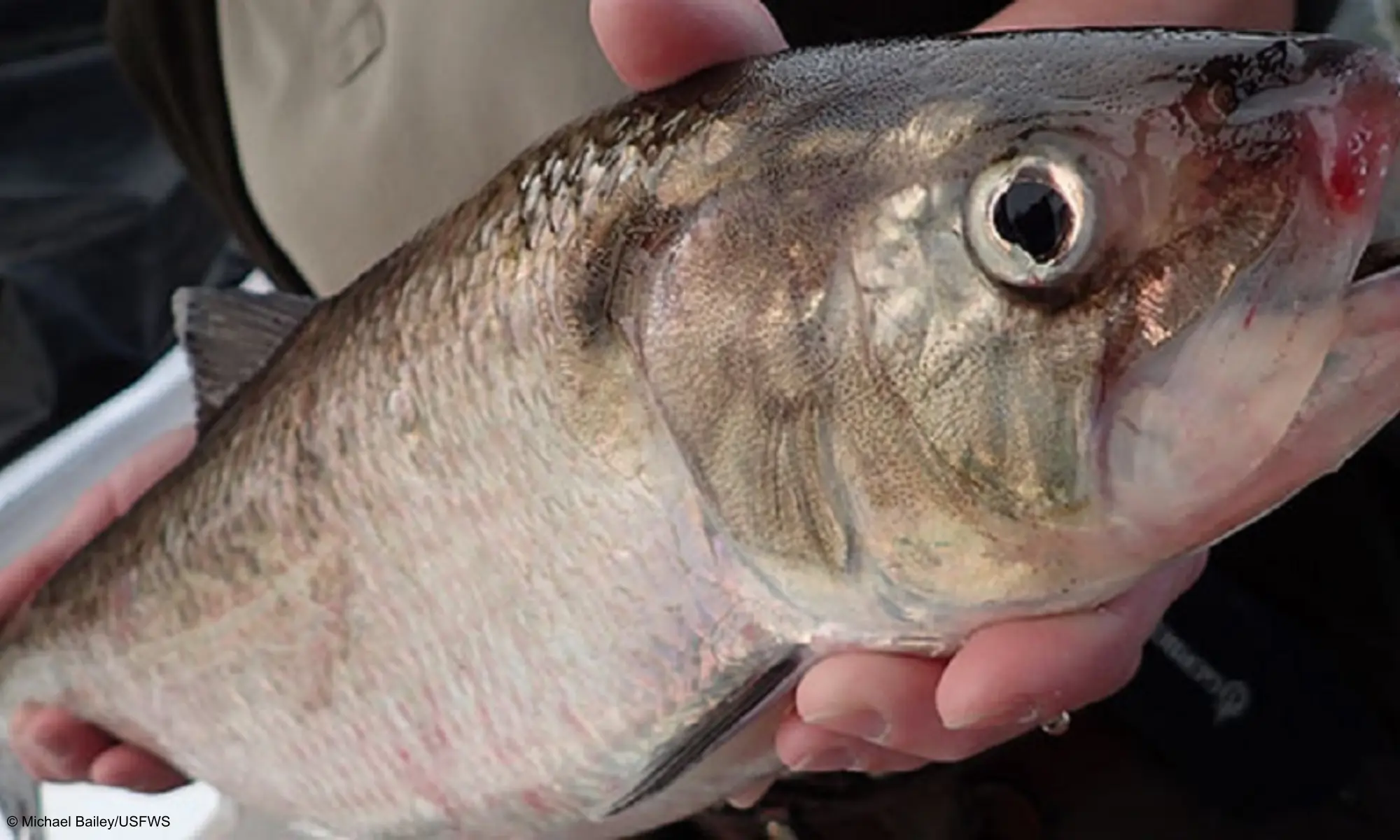
> This species can have multiple dark spots along their sides, starting behind the gill cover.
> The mouth of American Shad is terminal and lacks teeth in adults.
> Its dorsal fin is single and short, while the tail fin is deeply forked.
> American Shad possess a sharp, saw-like keel along their belly.
Natural History
> American Shad spend most of their lives in the ocean, but they return to freshwater to spawn between late fall and late spring.
> They are filter feeders and eat plankton, fish larvae and small crustaceans. Spawners feed very little when in freshwater.
> Females can produce up to 600,000 eggs, which they release in the water column while swimming in proximity with one or two males who fertilize the eggs. South of North Carolina, adult American Shad die after spawning but in more northern rivers they return to the ocean after spawning and can return to the same river several times.
> American Shad eggs hatch in 6 to10 days and the larvae that come out will stay in the river, as juvenile fish, until the following fall.
> When they are between 4 cm (1.5 inches) and 10 cm (3.9 inches) juvenile Shad begin their migration to sea, where they mature over several years.
Distribution
> Native to the Atlantic coast of North America, the geographic range of American Shad extends from Newfoundland to central Florida.
> Introduced to the Pacific coast in the late 19th century, they are now established in rivers from Baja California to Alaska. In Oregon they are abundant in the Umpqua, Siuslaw, Columbia and Willamette rivers.
> American Shad are found in the mainstem of the lower Willamette River below Waillamette Falls.
Size
> Adult American Shad typically range from 40 to 55 cm (16 to 22 inches) in length, although some can grow up to 76 cm (30 inches). Females tend to be larger than males.
> They generally weigh between 1 to 2.5 kg (2 to 5.5 lbs), with some individuals reaching up to 5 kg (11 lbs).
Habitat
> Considering that American Shad are an anadromous species, their ideal habitat includes marine and freshwater depending on their stage of life.
> In the ocean, American Shad inhabit coastal waters and estuaries, often schooling in large numbers.
> During the spawning season, they migrate into rivers and streams to spawn.
> In rivers, American Shad tend to reside in open water areas.
Diet
> American Shad are filter feeders, primarily consuming plankton and other small aquatic organisms in the ocean.
> Juveniles in freshwater feed on zooplankton, insects, and small crustaceans.
> Their diet in the ocean can also include small fish and shrimp.
Management Considerations
> One the west coast, American Shad do not receive any special protection because they are a nonnative species.
> However, in their native range American Shad populations have experienced large declines and are managed through fishing regulations aimed at ensuring sustainable populations.
> On the Atlantic Coast, American Shad have been listed for protection under the Anadromous Fish Conservation Act. Population restoration efforts have been trying to make migration easier by removing instream obstacles and restoring freshwater habitats.
References
For more information, see references.