

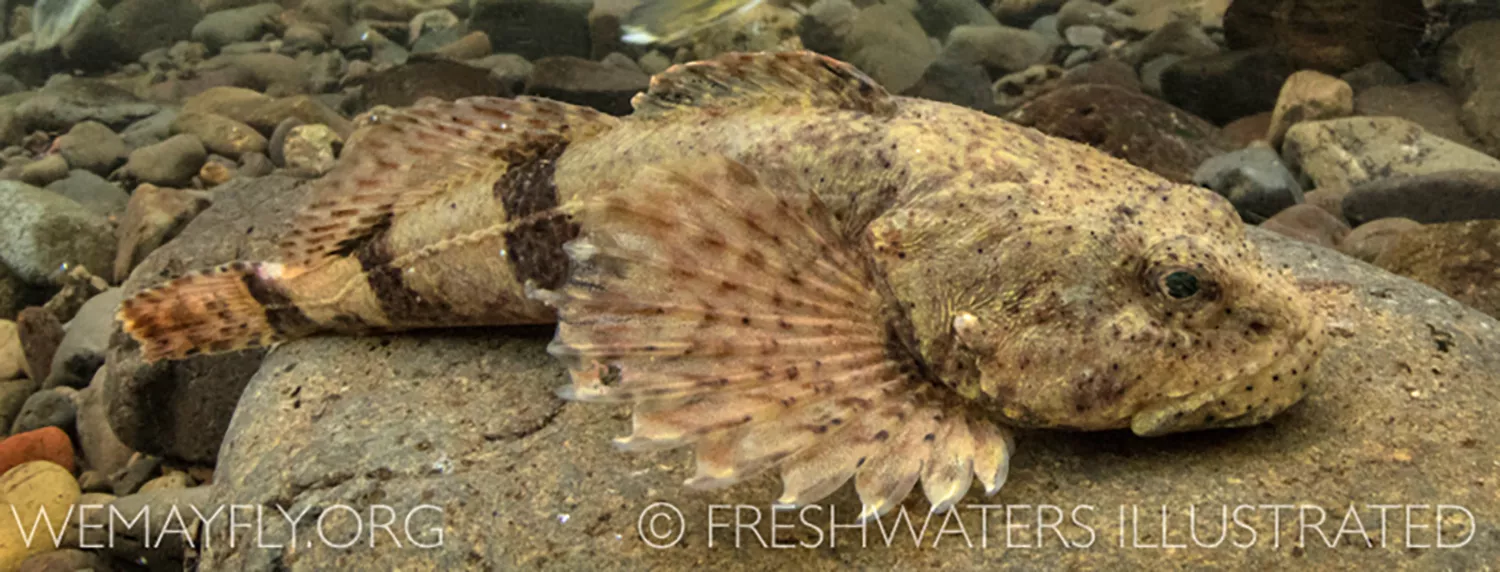
Torrent Sculpin Cottus rhotheus
Conservation Status: Not listed under the Endangered Species Act
> They are commonly called Bullhead by anglers.
> Like other species in the Cottidae family, Torrent Sculpins lack a swim bladder. This helps them stay on the bottom of the river.
> Their overall shape shows clear adaptations to a bottom-oriented life - a large head and mouth, eyes located high on the head, pectoral fins are large and fan-shaped, two dorsal fins and a long anal fin.
> Torrent Sculpins can be found further upstream than most other fish species, with the exception of Coastal Cutthroat Trout, even above falls.
> While sculpins are mostly marine, the genus Cottus is the one that includes all the freshwater species in both North America and Eurasia.


Identification Tips
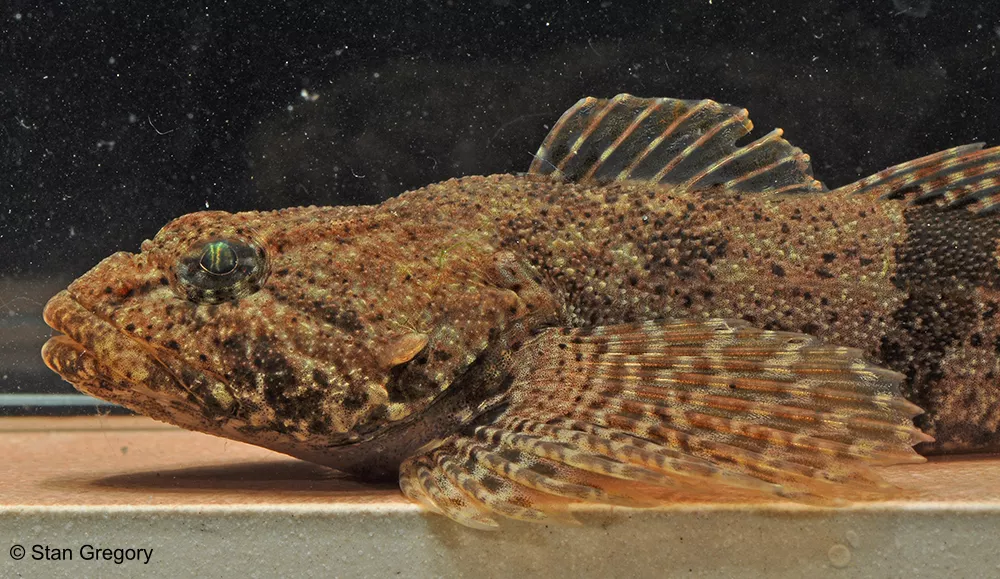
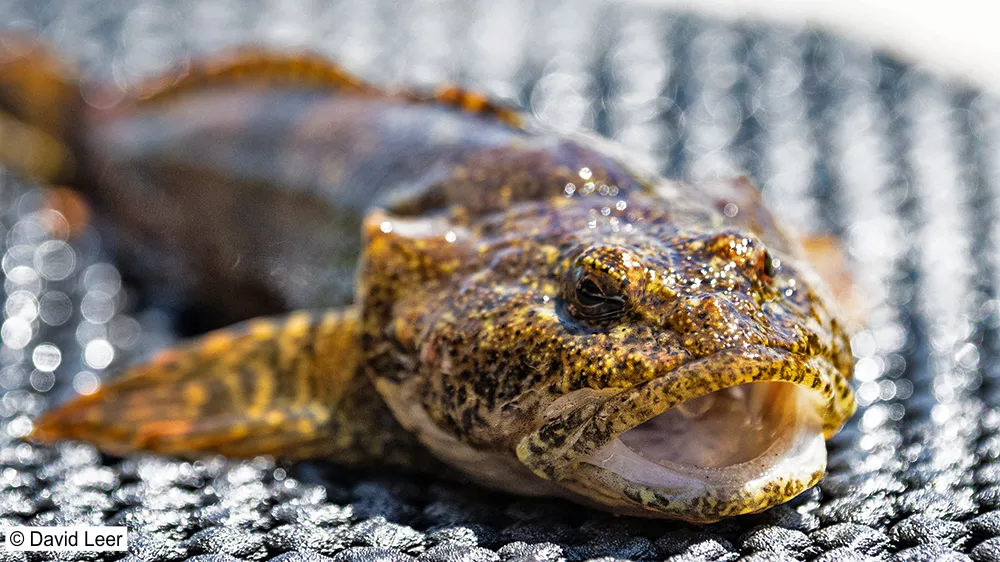
> Their mouth is large, with the tips of the maxillaries extending behind the anterior margin of the lens and usually under the posterior three-quarters of the eye. They have two chin pores.
> The Torrent Sculpin is characterized by two prominent, forward-slanting dark saddle marks under the second dorsal fin that extend below the lateral line (which is complete).
> Torrent Sculpin have a robust body with a large head (it fits less than three times into the standard length), and the caudal peduncle (base of the tail) is narrow.
> They are usually heavily prickled on the back and sides, with 7–9 dorsal spines and 11–17 rays in the anal fin.
Natural History
> Torrent Sculpins spawn from May to June.
> They can live up to six years.
> Torrent Sculpins are dominant competitors among other sculpin species.
Range
> Torrent Sculpins are found throughout the Columbia River basin in British Columbia, Washington, Oregon, Montana, and Idaho.
> They occur in coastal streams down to the Trask River in Tillamook Bay.
> Torrent Sculpins also inhabit Pacific slope drainages from British Columbia to Oregon.
Size
> Their standard length (excluding the tail) ranges from 2.1 to 6 inches (5.5 to 15 cm).
Habitat
> Torrent Sculpins prefer swift waters of small to large rivers with stable gravel or cobble bottoms but can also be found along rocky lakeshores.
Diet
> They eat aquatic insects when smaller than 7 cm (2.8 inches). Above that size, they almost exclusively prey on fish, including other sculpins.
Conservation and Management
> From 2011–2013 to 2021–2023, there was a river-wide decline in abundance between decades in the Willamette River.
Similar Species
> Mottled Sculpin
> Paiute Sculpin
> Prickly Sculpin
> Reticulate Sculpin
> Riffle Sculpin
References
For more information, see references.