

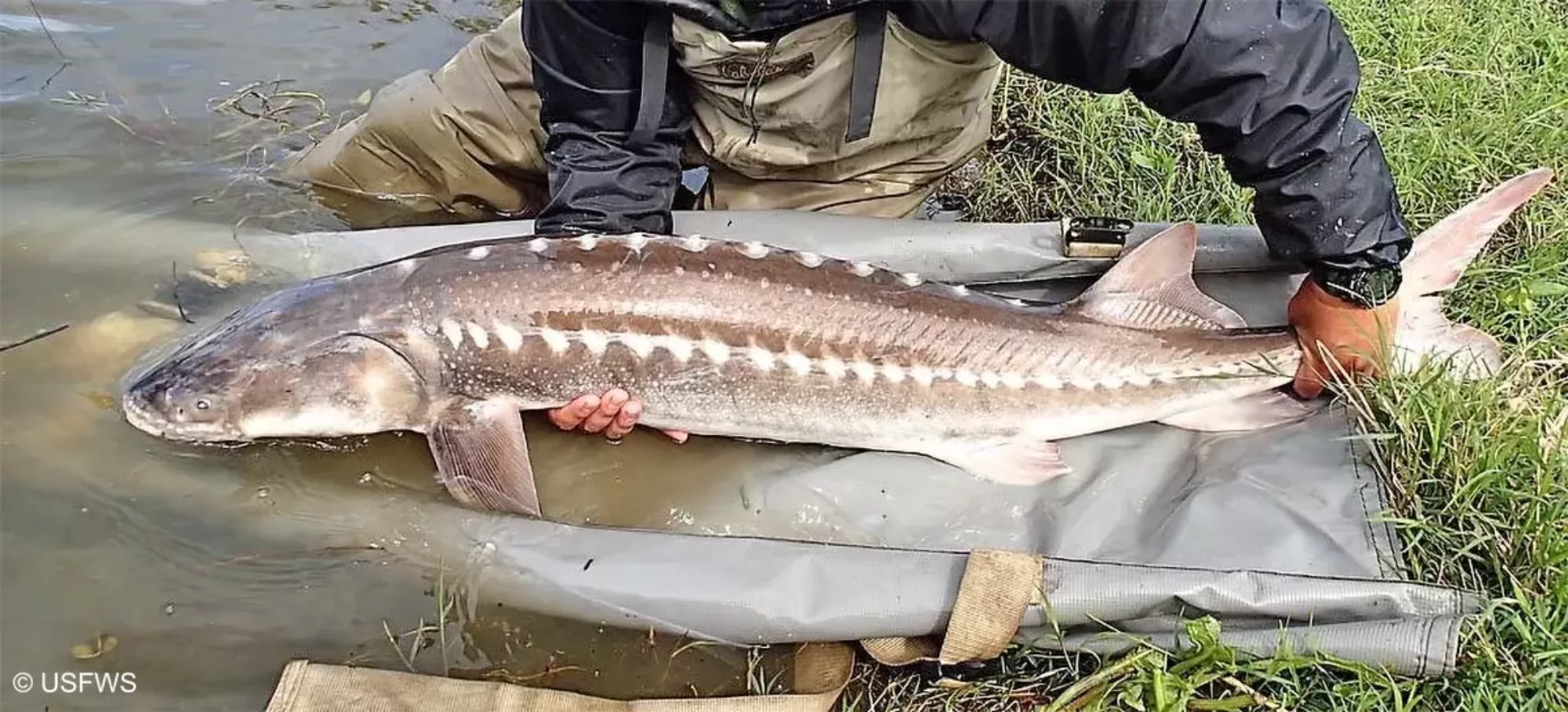
White Sturgeon Acipenser transmontanus
Conservation Status: Not listed under the Endangered Species Act
> White Sturgeon is the largest freshwater fish in North America, as they can grow up to 20 ft (6 m) and over 1,500 lbs (680 kg).
> They were a primary food source for Indigenous Peoples.
> In the 1800s in the Columbia River basin when they were driven to near extinction owing to over-harvesting their caviar.
> Populations that are not landlocked or blocked between dams, spend part of their life in the ocean and move into rivers to spawn. Landlocked fish are known to make local migrations.
> In the Columbia River, Steller Sea Lions have learned to prey on White Sturgeon in areas below dams where sturgeon congregate.
Identification Tips
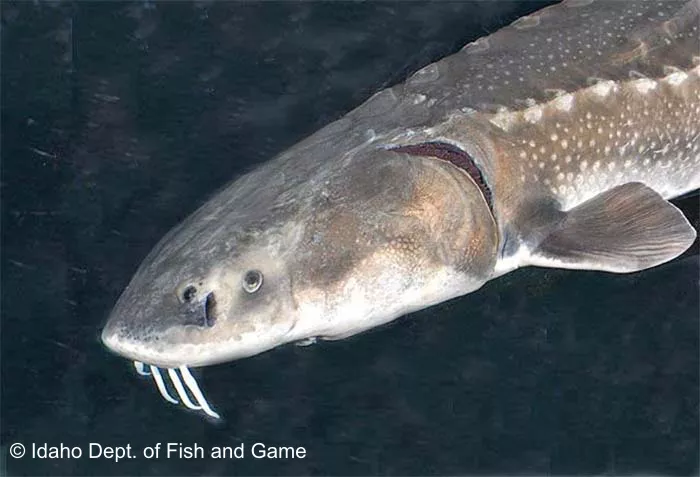
> They have moderately blunt snouts and barbels located closer to the snout tip than to the mouth.
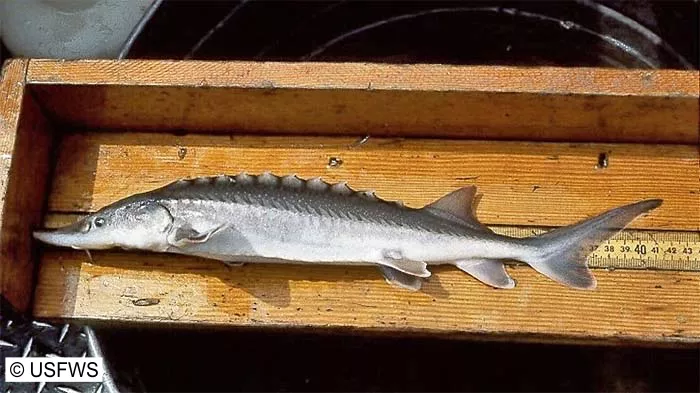
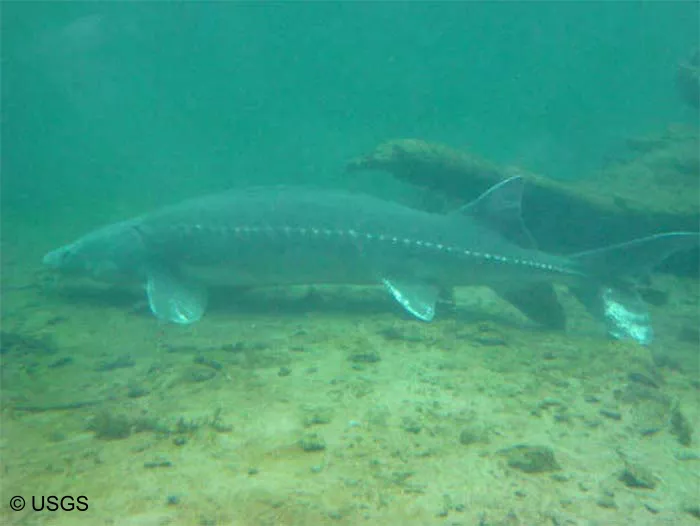
> White Sturgeon have five rows of bony plates or scutes—one along the top, two along the middle sides, and two along the lower sides.
> The upper lobe of the caudal fin is longer than the lower lobe.
> Their upper bodies are gray, while their undersides are white to pale gray.
> They can be distinguished from Green Sturgeon, which share their coastal range, by the absence of 1–2 dorsal scutes behind the dorsal fin (present in Green Sturgeon). Additionally, the vent is located near the tail in White Sturgeon, whereas in Green Sturgeon it is positioned between the pelvic fins.
Natural History
> White Sturgeon are slow-growing, late-maturing, sea-run fish.
> They are adapted to life along the bottoms of large, cold rivers, including the Willamette River.
> They utilize rivers, streams, estuaries, and the ocean to complete their life cycle, although some populations have become landlocked between dams and remain in river pools.
> They reach sexual maturity between 10 and 15 years of age and spawn between May and July in river channels. Historically, major spawning rivers included the Sacramento–San Joaquin River (California), the Columbia River (Oregon), and the Fraser River (British Columbia).
> In the Willamette River, White Sturgeon are known to spawn below Willamette Falls.
> They may live more than 60–70 years.
Distribution
> A Pacific Northwest native, the White Sturgeon ranges from Monterey, California to the Gulf of Alaska. They occur throughout the Columbia River basin, including the Willamette River, though some populations have become landlocked between dams.
> There are no credible historical records of White Sturgeon occurring above Willamette Falls, but they were introduced above the falls in the mid-20th century.
Size
> Historically, individuals reached up to 20 ft (6 m) and 1,500 lbs (680 kg). Today, most grow to about 6 ft (2 m), and landlocked populations rarely exceed 200 lbs (91 kg).
Habitat
> In the Willamette River, they spend most of their time along the bottoms of deep pools, generally making only local migrations.
Diet
> White Sturgeon are opportunistic bottom-feeders, using their long snouts and barbels to detect prey. Their sense of smell is highly developed, compensating for their limited vision.
> Juveniles feed on clams, mussels, crayfish, worms, and fish eggs; adults consume larger prey such as smelt, anchovies, lamprey, shad, and salmon.
Conservation and Management
> Although not listed under the Endangered Species Act, White Sturgeon are considered a species of concern in the state of Oregon.
References
For more information, see references.