

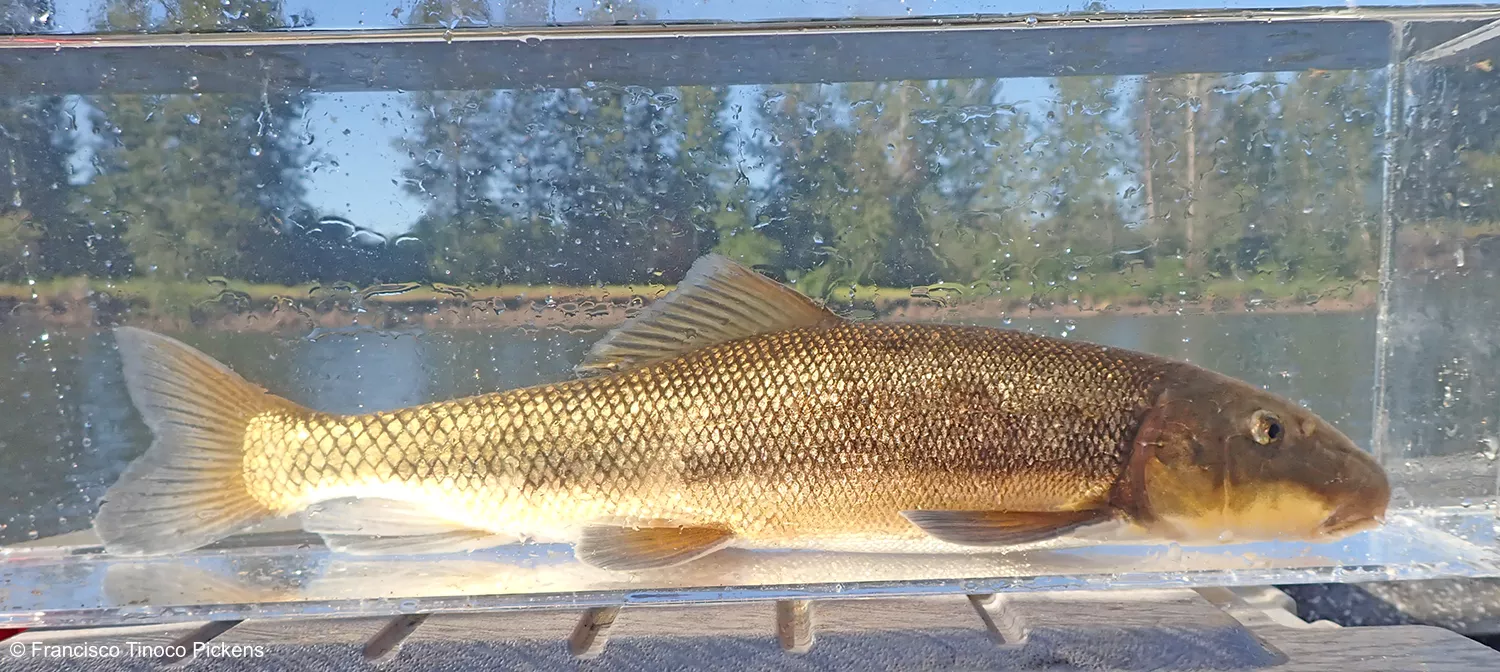
Largescale Sucker Catostomus macrocheilus
Conservation Status: Not listed under the Endangered Species Act
> Largescale Sucker are the most common native fish in the main stem of the Willamette River, but it is also a predominate fish in the broader Columbia River basin.
> They are the main prey species of large raptors such as ospreys and bald eagles, as well as river otters and other fishes.
> They are known to bioaccumulate large amounts of chemicals such as PCBs and mercury because they live up to 15 years.


Identification Tips
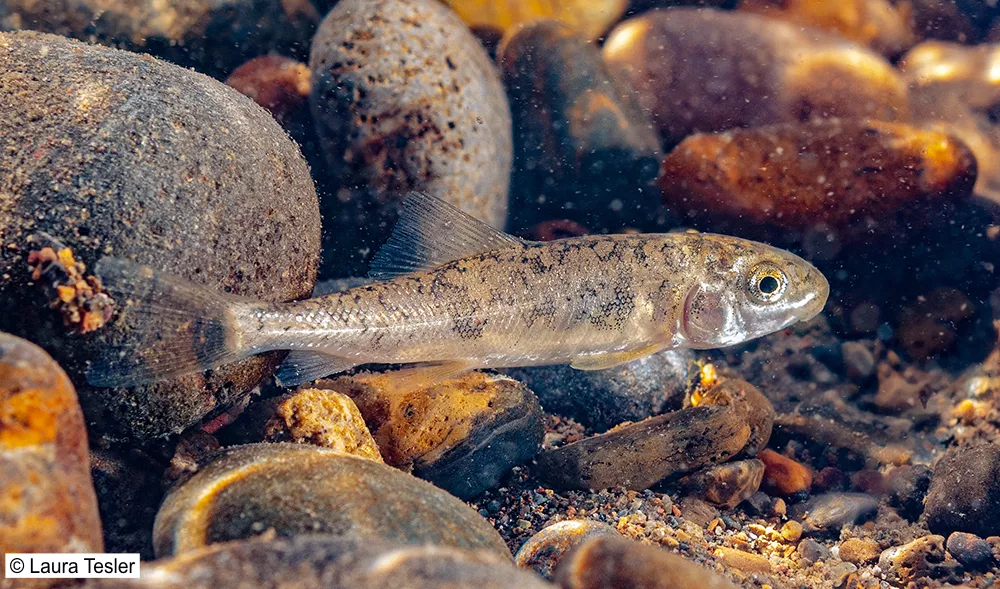
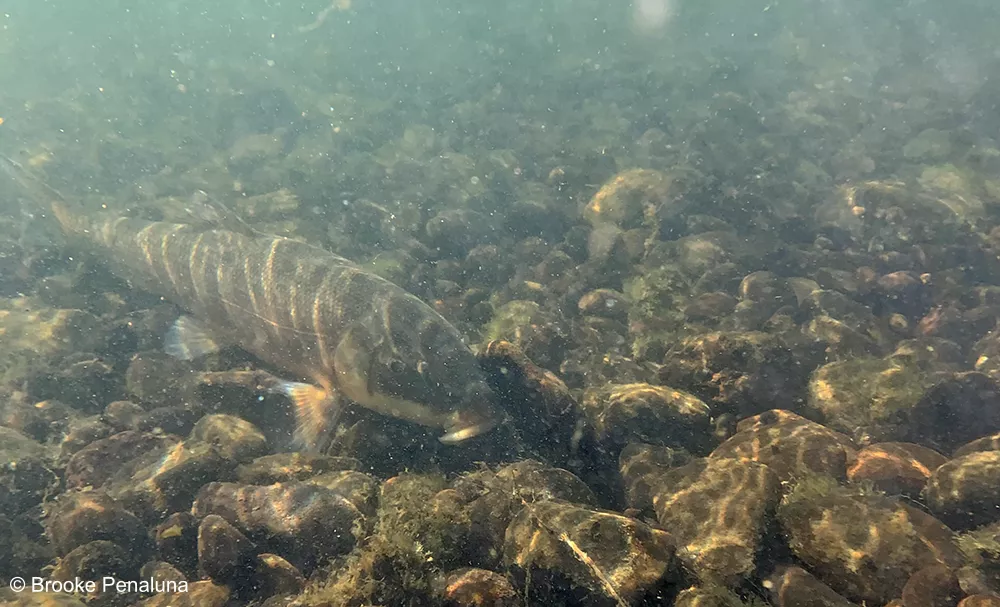
> Largescale Suckers are easily recognized by their subterminal mouth (on the underside of the head), brownish to dark green back with a white belly, and large, well-defined scales along the sides of the body.
> They often develop an orange hue over their brown coloration and have a large caudal fin with a narrow caudal peduncle. The large anal fin, when pressed against the body, reaches the base of the caudal fin.
Natural History
> Largescale Suckers are migratory within river systems, likely for spawning purposes.
> They spawn in the spring on small gravel bars or sandy submerged beaches. Females can lay up to 20,000 eggs that adhere to the gravel bottom.
> After hatching, larvae feed on small zooplankton before shifting to benthic feeding. Sexual maturity occurs at about 4–5 years of age.
Distribution
> The species ranges from British Columbia, Canada, south through Oregon and eastward into Idaho and Montana.
Size
> Largescale Suckers show considerable size variation. Juveniles exceed 4 inches (10 cm) in length, while adults typically reach 24 inches (61 cm) and weigh around 3 lb (1.3 kg).
Habitat
> Like all suckers, they live along the river bottom, often in shallow water, but can occur at depths up to 80 ft (24 m).
> They inhabit all major Willamette River habitats, including the mainstem, backwaters, floodplains, and tributaries.
Diet
> Largescale Suckers are omnivorous. They consume snails, worms, and other macroinvertebrates, as well as algae, diatoms, and other benthic plant material.
Conservation and Management
> From 2011–2013 to 2021–2023, there was no apparent change in abundance or occupancy in the Willamette River.
Similar Species
> Cascadian Sucker — smaller in size and with smaller scales.
References
For more information, see references.