

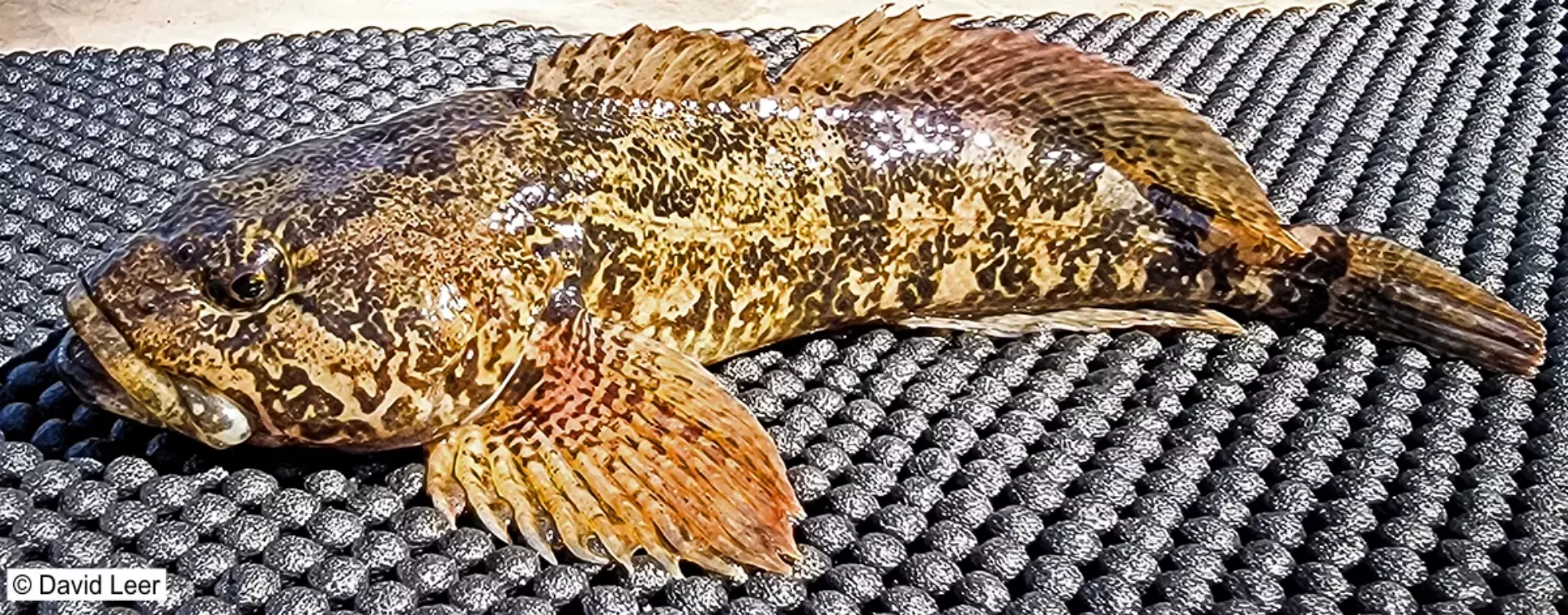
Prickly sculpin Cottus asper
Conservation Status: Not listed under the Endangered Species Act
> They are the largest sculpin in the Willamette River basin.
> Like other members of the Cottidae family, Prickly Sculpin lacks a swim bladder. This helps them to stay on the bottom of the river. A swim bladder is like a balloon inside many fish; it fills with air and helps fish maintain buoyancy in the water.
> The male watches and takes care of the eggs not only protecting them from potential predators but also fanning them with his fins to keep them oxygenated.

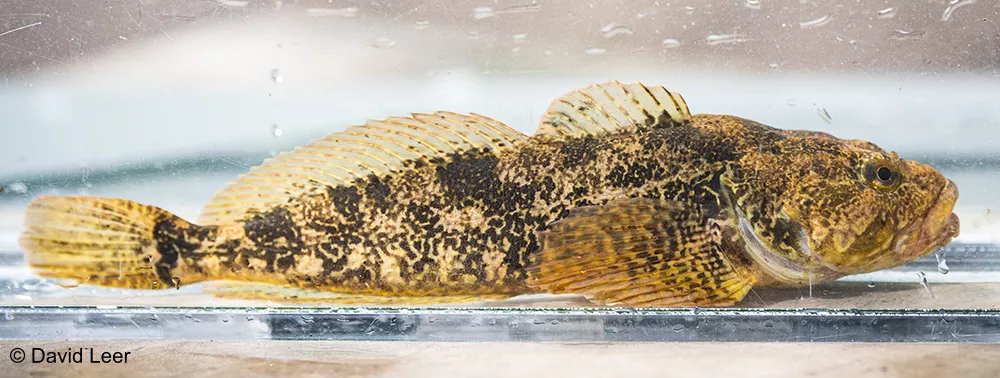

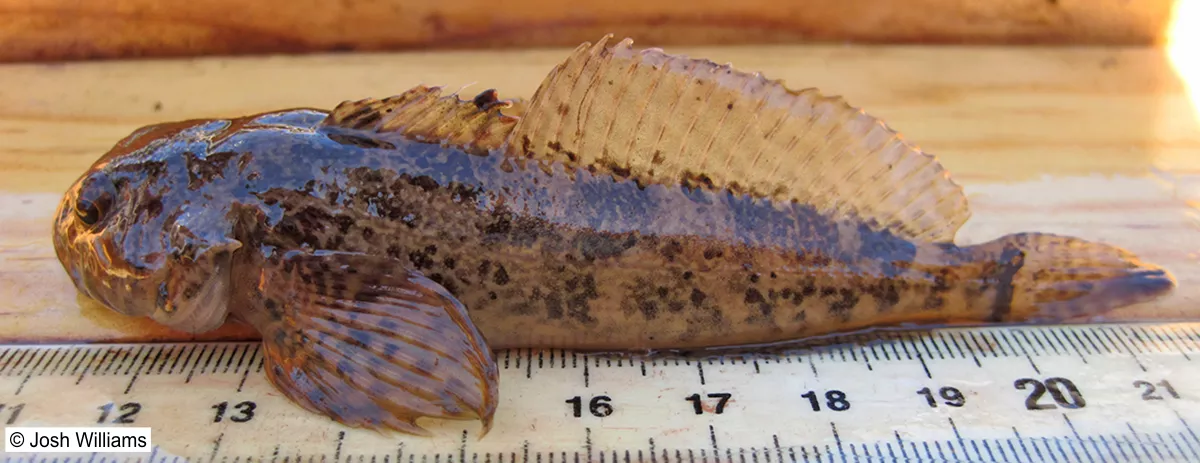
Identification Tips
> Prickly Sculpins have small spines over most of their body that feel like sandpaper. Their skin is smooth to the touch when moving towards the head, but when touched in the reverse direction they feel rough like sandpaper.
> Prickly Sculpin have inconsistent blotchy black pattern throughout the body.
> They have a disproportionately large head and large fan-like pectoral fins.
> They have an orange band or spot on the leading edge of the first dorsal fin in spawning season.
Natural History
> Prickly Sculpin hide close to the river bottom during the day and actively feed during the night.
> Prickly Sculpin usually mature within their second to fourth year of life. Once sexually mature, they either migrate downstream to brackish water to spawn or they spawn in permanent streams and seasonal habitats in the spring. Prickly Sculpin can migrate a fairly long distance and coastal forms have been found to migrate upwards of 120 km upstream of their spawning grounds.
> They can live for up to seven years.
Range
> A Pacific Northwest native species, the Prickly Sculpin, can be found from California to Alaska. They are found throughout the Columbia River basin, including throughout the Willamette River basin.
Size
> They grow to be 4 to 10 inches (10 to 25 cm), with juveniles being on the smaller side and the large adults being around 10 inches.
Habitat
> Prickly Sculpin live on rocky or sandy substrates at the river bottom.
> They hide under large wood and rocks. Prickly Sculpin are commonly found in pools or areas of steady current.
> They can also inhabit tide pools or even in brackish water if living near river mouths.
Diet
> Prickly Sculpin primarily feeds on macroinvertebrates, but larger sculpin can eat fish and snails, and sometimes salmon eggs when available.
Conservation and Management
> From 2011–2013 to 2021–2023, there was a river-wide decline in abundance that differed by river-slice position in the Willamette River between those decades.
Similar Species
> Mottled Sculpin
> Paiute Sculpin
> Reticulate Sculpin
> Riffle Sculpin
> Torrent Sculpin
References
For more information, see references.