

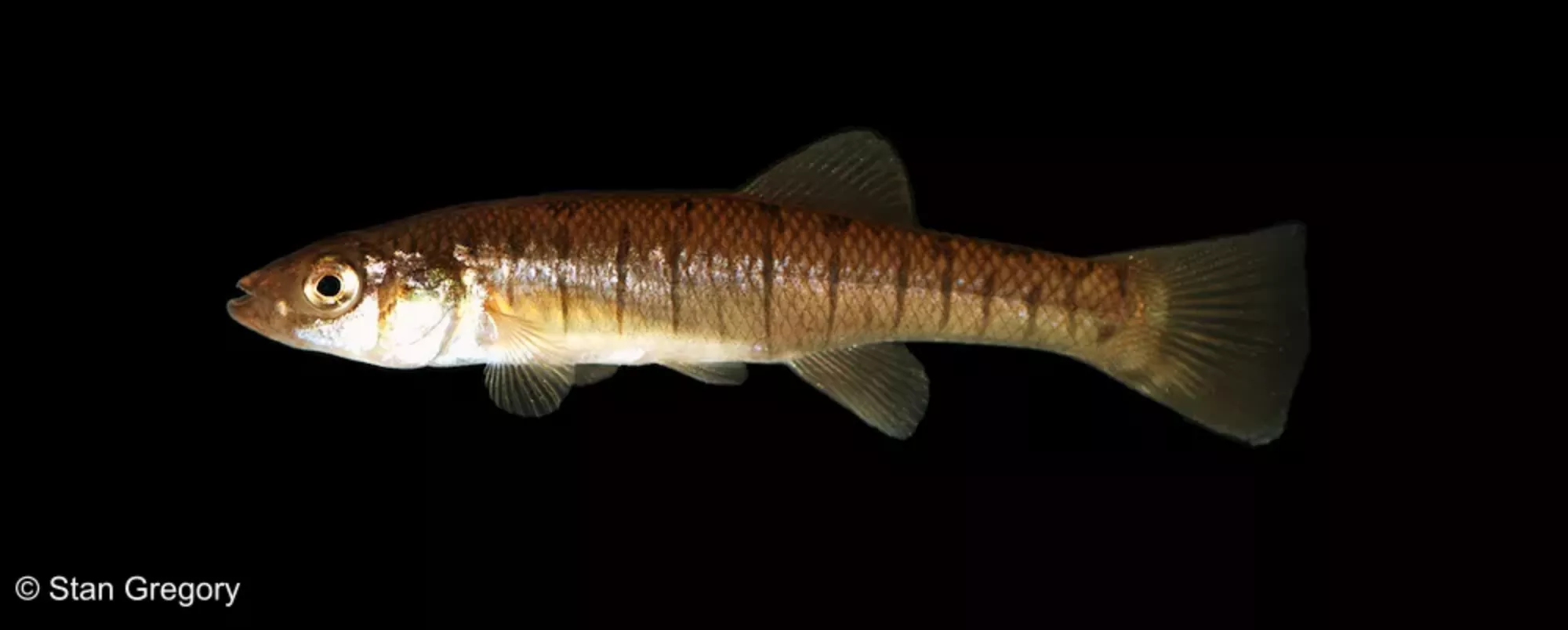
Banded Killifish Fundulus diaphanous
> This species is euryhaline (tolerant of variable water salinity).
> The banded Killifish is a small, colorful fish with a distinctive banded pattern on the sides.
> This species is often used as baitfish due to their hardiness and availability.
> They exhibit complex behaviors, including courtship displays and territorial defense.
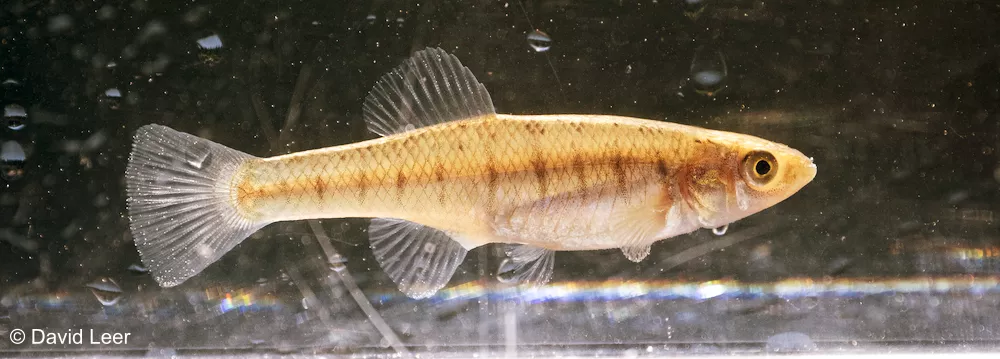
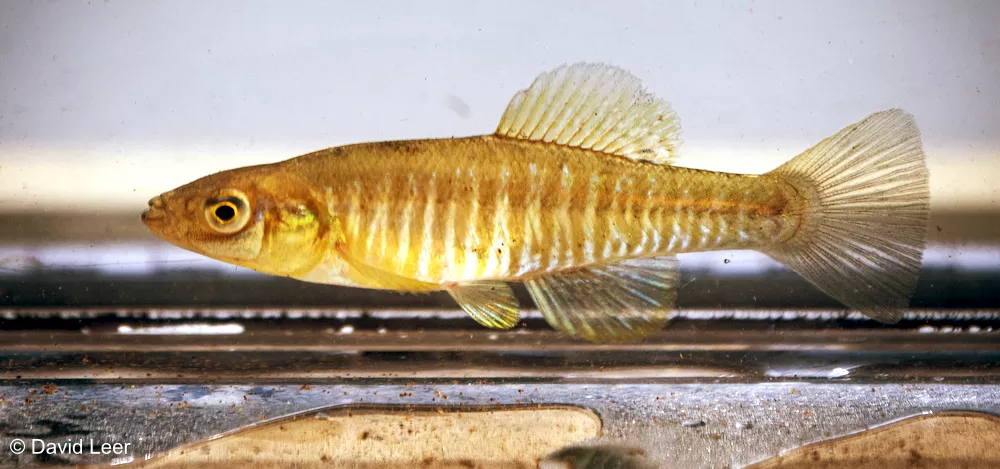
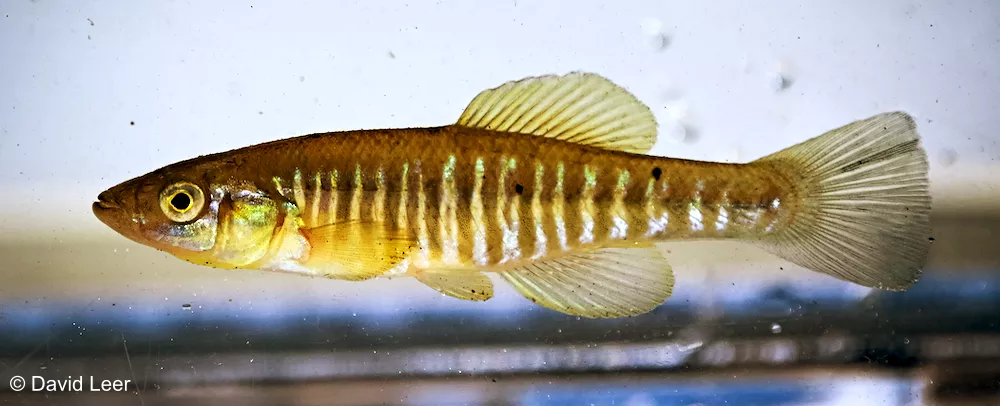
Identification Tips
> Banded Killifish have slender and laterally compressed body with pointed snouts and mouths in a superior position. Their lower jaw protrudes further than the upper jaw.
> Typically, banded Killifish display 7-12 dark vertical bars on their sides (in females the bars are less distinct and narrower than in males).
> Fins can range from clear to dusky olive-yellow and dorsal fin originates in front of anal fin. They have 13-15 dorsal fin rays and 10-12 anal fin rays. The tail (caudal fin) is rounded.
> The lateral line is absent in these fish but they have 40 to 49 lateral scales.
Natural History
> Banded Killifish inhabit a variety of freshwater and brackish habitats, including streams, ponds, marshes, and estuaries.
> They are most commonly found in shallow, vegetated areas with slow-moving or still water.
> Spawning begins in June and can last through August. Females deposit up to 200 eggs. The eggs adhere to plants or the substrate. Juveniles emerge 10-12 days later depending on water temperature.
> Banded Killifish feed on a diet of small invertebrates, zooplankton and algae.
> Populations may exhibit seasonal movements in response to environmental cues such as water temperature and food availability.
Distribution
> Banded Killifish are native to eastern North American Atlantic Slope drainages such as: St. Lawrence-Great Lakes, Mississippi River basins from Quebec to Manitoba and south to southern Pennsylvania, northern Illinois and northeastern Nebraska.
> Banded Killifish currently occur in the Willamette River from the mouth to just above Salem.
Size
> Adult banded Killifish typically range from 5 to 10 centimeters (2 to 4 inches) in length.
> Females tend to be slightly larger than males, but size can vary depending on environmental conditions and age.
Habitat
> Banded Killifish inhabit a variety of freshwater and brackish habitats, including: lakes, ponds, slow-moving streams, marshes and estuaries.
> They prefer shallow vegetated areas with ample cover and access to food resources.
Diet
> Banded Killifish are opportunistic feeders, consuming a variety of small invertebrates, aquatic insects, zooplankton, and algae.
> They use their small mouths to pick food items from the water column or substrate.
Management Considerations
> Banded Killifish are considered invasive in the Willamette River and, therefore, are not protected.
References
> For more information, see references.