

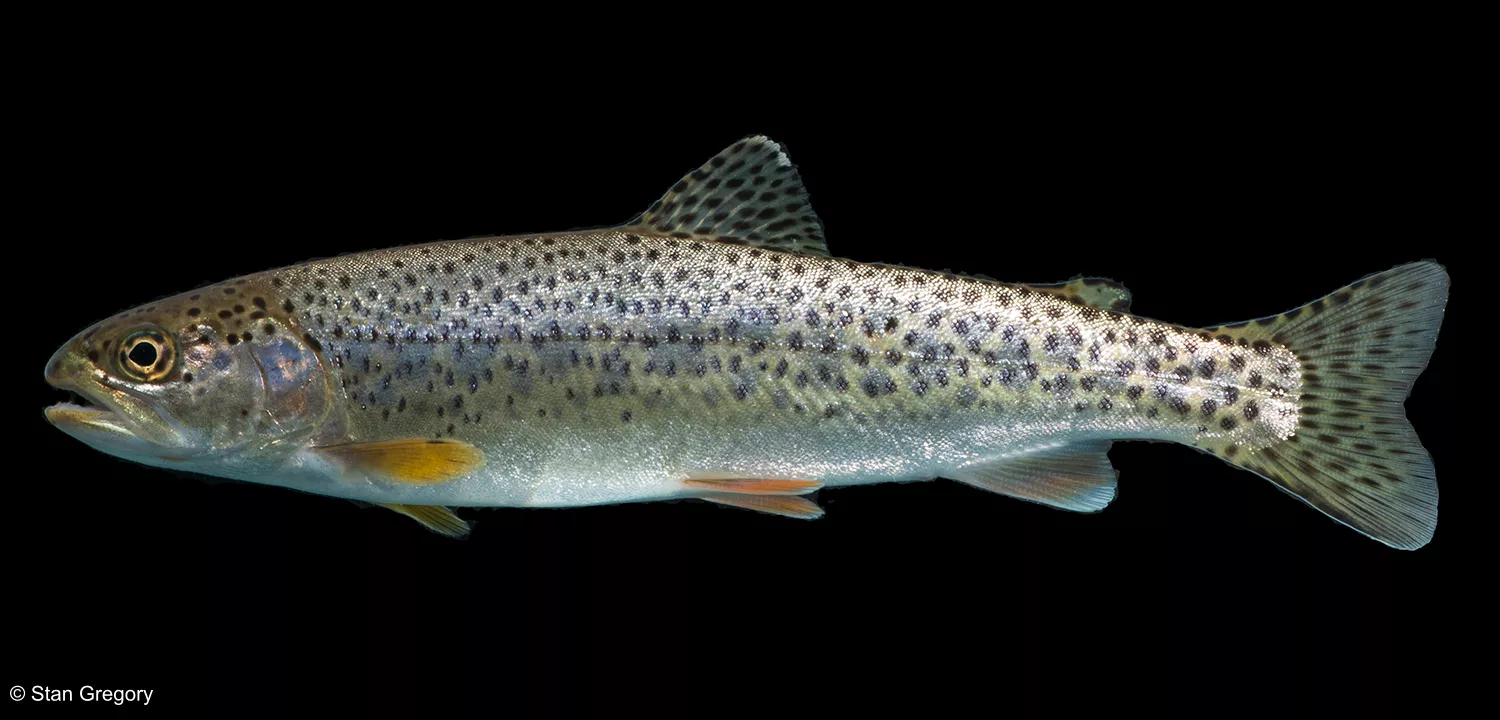
Coastal Cutthroat Trout Oncorhynchus clarkii clarkii
Conservation Status: Not listed under the Endangered Species Act
> Coastal Cutthroat Trout are the only cutthroat trout species with a sea-run life form. Coastal cutthroat trout life forms include sea-run, lake, fluvial, and stream-living.
> They have the broadest distribution of any fish in the Willamette River basin and other watersheds they inhabit because they are found from headwater streams to river mouths and coastal habitats.
> They are generally the salmonid found furthest upstream in a network, and hence they are often the fish used to determine the upper distribution boundary of fish throughout their range.
> They are also known as speckled trout (stream resident), blueback trout (sea-run), salter (sea-run), or harvest trout.
Identification tips
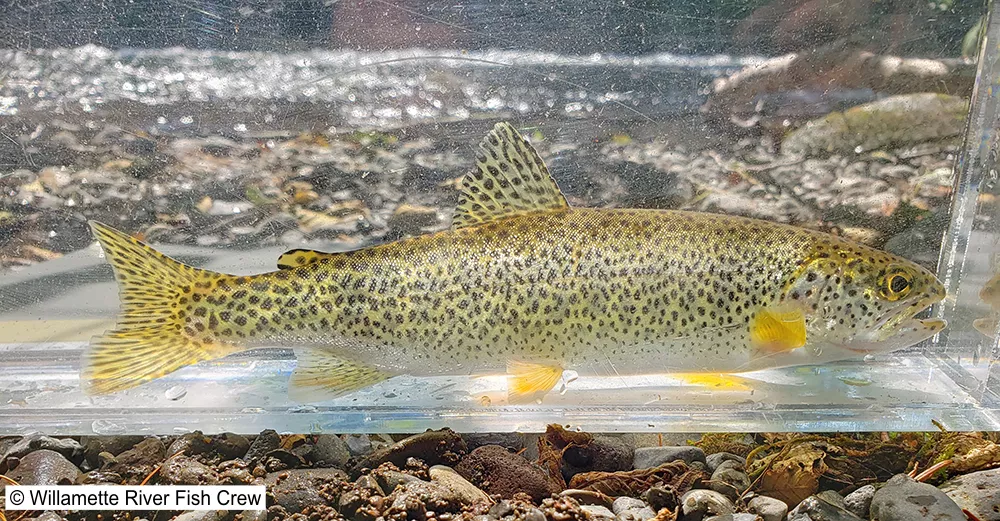
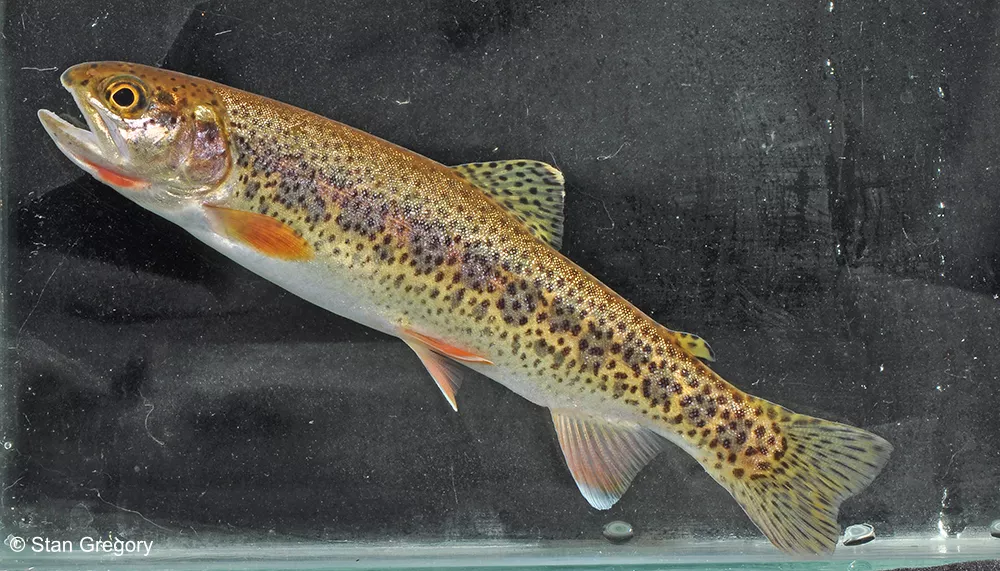
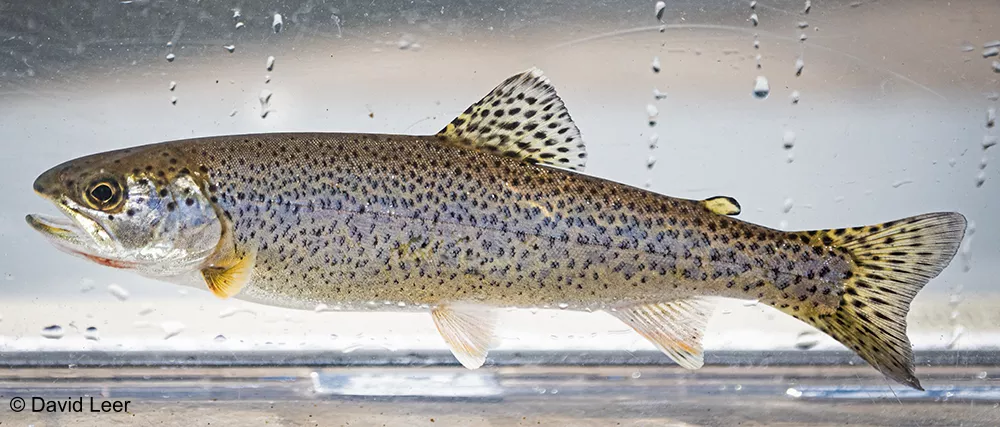
> Coastal Cutthroat Trout have a red slash underneath their jaw that is bright red or orange-red. This differentiates it from Rainbow Trout/Steelhead.
> They generally have heavier spotting over their entire body, specifically below the lateral line and on anal and paired fins.
> When they are sea-run, they are silvery in color.
Natural history
> Coastal Cutthroat Trout have complex and varying life histories, including sea-run, lake, fluvial, and stream-living populations.
> Sea-run forms migrate from freshwater to saltwater and back to their natal streams before the end of their lifecycle, whereas lake, fluvial, and stream-living forms live in freshwater.
> Some Coastal Cutthroat Trout spend their entire lives in a relatively small section of a river within 655 feet (200 m) of their birthplace while others migrate long distances into marine habitats.
> Several life history expressions often co-occur, leading to the synchronous use of a wide variety of habitat types, including rivers, tributaries, headwater streams, lakes, estuaries, and the nearshore ocean within a single watershed.
> Depending on local conditions, coastal cutthroat trout spawn from late winter through spring, with peak activity in February. Fry emerge between March and June. Upstream movements of adults occur year-round, probably owing to various forms using the river, but peak in July and August.
Range
> Coastal Cutthroat Trout extends from Prince William Sound, Alaska, south to the Eel River in northern California, and inland up to several hundred miles in the Cascade, Rocky and Sierra Nevada mountain ranges to the Pacific Ocean.
> They are found throughout all 14 historic Willamette SMU sub-basins, including the Lower Willamette, Tualatin, Yamhill, Molalla, Luckiamute, North Santiam, South Santiam, Mid Willamette, Marys, Calapooia, Long Tom, McKenzie, Middle Fork Willamette, and Coast Fork Willamette.
Size
> Juveniles are smaller than 3 inches (7.6 cm) and adults are up to around 22 inches (56 cm).
Lifespan
> Their lifespans are 3–5 years for stream-living trout, 7–9 years for fluvial and lake forms, and 7–10 years for sea-run forms.
Habitat
> They are a widespread species and so they occupy many different habitats. Several life history expressions of Coastal Cutthroat Trout often co-occur, leading to the synchronous use of a wide variety of habitat types, including rivers, tributaries, headwater streams, lakes, estuaries, and the nearshore ocean within a single watershed.
> In several studies, cutthroat trout were not usually found in water temperatures higher than 71.6°F (22°C), but juveniles use water with temperatures around 59°F (15°C), although they can tolerate temperatures as high as 78.8°F (26°C) for brief periods. In the Willamette River, they are found in the main channel, sloughs, tributaries, and seasonal waterways.
Diet
> They are opportunistic feeders and they eat almost any prey item. In small streams, they eat aquatic and terrestrial invertebrates. In rivers and lakes, they eat invertebrates and fish. In the ocean, they eat crustaceans and fishes.
Conservation and Management
> Although this species is not listed under the Endangered Species Act, they are listed as a sensitive species by the state of Oregon.
Information gaps
> There is a lack of data for abundance, distribution, and population age information.
> More research is warranted to understand population connectivity and genetic relationships among different life history types.
> Their distribution in marine waters and mechanisms affecting marine survival need to be studied.