

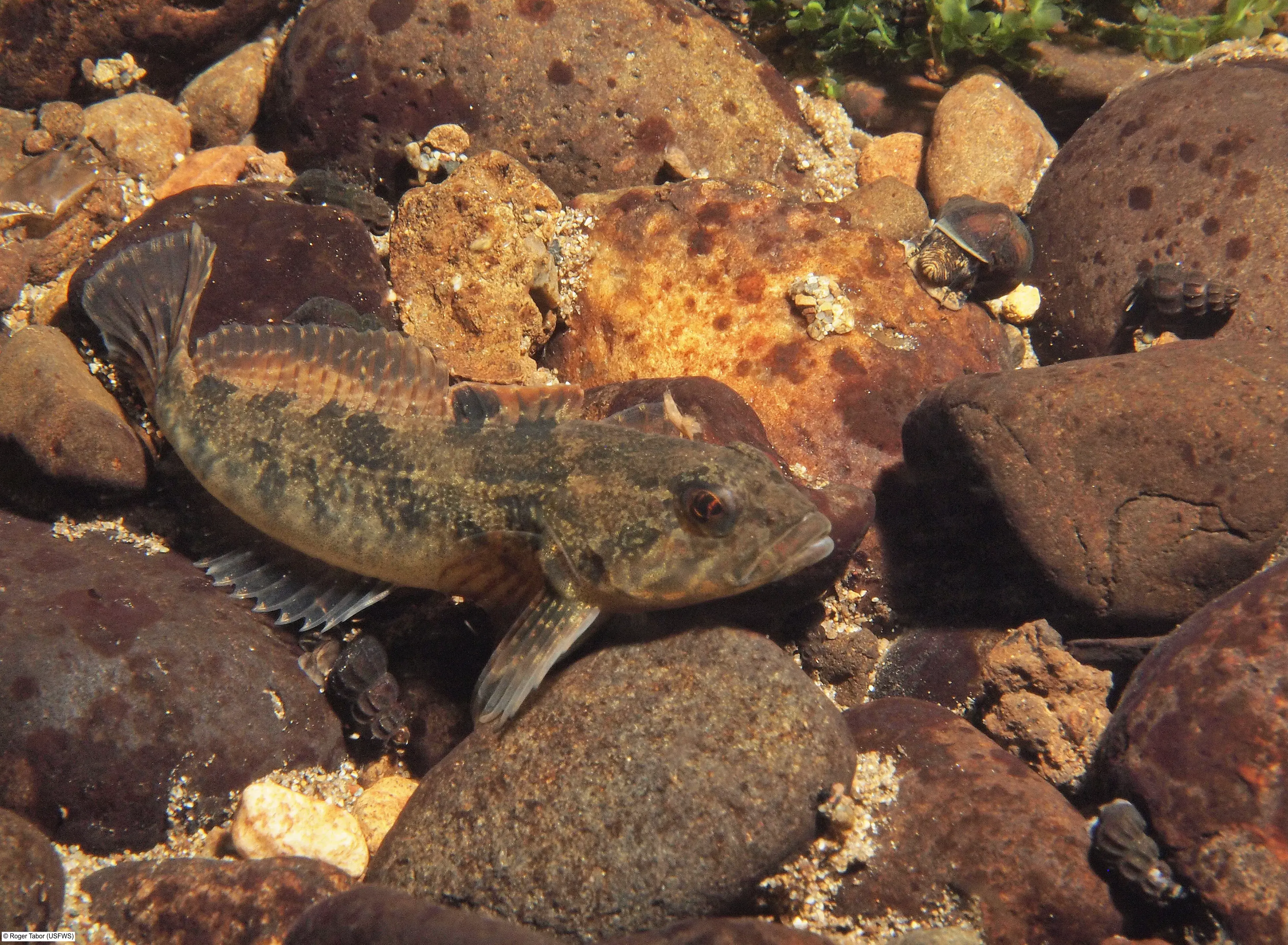
Riffle Sculpin Cottus gulosus
Conservation Status: Not listed under the Endangered Species Act
> Riffle Sculpin are often found in colder water than other sculpins.
> Riffle Sculpin in Oregon may be part of a sculpin cryptic species complex, where it is difficult to differentiate them based on field identification. Further research needs to focus on understanding their genetic lineage, ecology, and distribution.

Identification Tips
> Riffle Sculpin are mottled in color with a black spot or blotch on the rear side of the first dorsal fin, and they usually have joined dorsal fins.
> Riffle Sculpin have prickles on their body behind their pectoral fins, which feel like rough sandpaper.
> Spawning males are dark and may have orange on the edge of the first dorsal fin.
Natural History
> Riffle Sculpin hide close to the river bottom during the day and actively feed during the night, like many other sculpins.
> Riffle Sculpins are found in cold headwater streams down into mainstem rivers.
> Riffle Sculpin usually mature within their second year of life and can live for up to four years.
Range
> Riffle Sculpin can be found from California to Washington, including throughout the Columbia River basin and the Willamette River. However, recent work suggests that the California lineages are different, distantly related species from those in Oregon and Washington. Further research is needed on Oregon Riffle Sculpins to understand their genetic lineage and define their current distribution.
> Riffle Sculpin are relatively rare in the Willamette River basin.
Size
> They grow to about 4 inches (10 cm), and larger sizes are uncommon.
Habitat
> Aptly named, Riffle Sculpin are found in riffle habitats, but they can also be found in pools.
> They are found under the cover of large wood and rocks, often in streams, usually preferring colder water than other sculpin species.
Diet
> Riffle Sculpin are opportunistic feeders and generally feed at night. They feed on benthic invertebrates, fish, caddisflies, and mayflies.
Conservation and Management
> No specific conservation concerns have been documented for Riffle Sculpin within the Willamette River basin.
Similar Species
> Mottled Sculpin
> Paiute Sculpin
> Prickly Sculpin
> Reticulate Sculpin
> Torrent Sculpin
References
For more information, see references.