


Chiselmouth Acrochelius alutaceus
Conservation Status: Not listed under the Endangered Species Act
> Chiselmouth are named for the sharp ridge on their lower lip used for scraping algae from rocks.
> Chiselmouth are the single member of their Acrocheilus genus living up to 22 years old.
> They hybridize with other minnows including the Northern Pikeminnow, Red Side Shiner, and Peamouth.
> Chiselmouth were among the fishes used by the Nez Perce people as food, often harvested from tributaries to larger rivers.


Identification tips
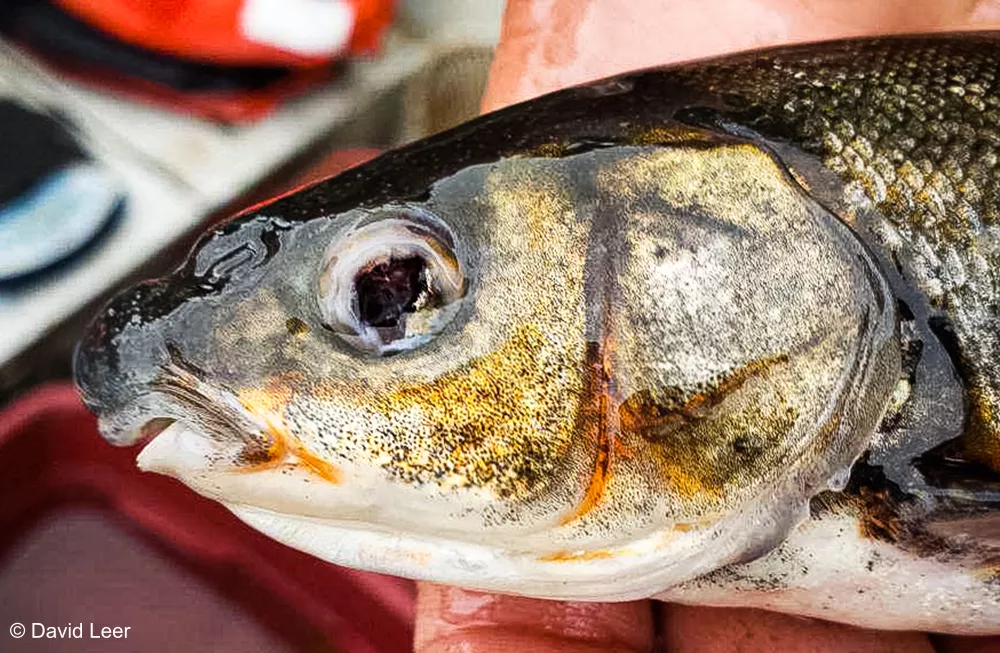
> Chiselmouth have hard plate-like cartilaginous bottom lip.
> They have a stubby snout with a relatively large eye.
> They have a large and deeply forked caudal fin with a narrow caudal peduncle.
> Chiselmouth do not have a defining coloration as they are drab or dark gray/brown.
Natural history
> Adult Chiselmouth live and feed on the river bottom.
> These fish are not known to migrate unless it is to a tributary for spawning. Little is known about their spawning habits, except that it occurs in June and July.
> Chiselmouth mature at about 3 to 4 years of age and live to be 6 years old.
> Eggs have been found on open stream bottoms and buried among rocky substrates.
Range
> Chiselmouth are native to the Pacific Northwest. They are found throughout the Columbia River basin and its tributaries.
> In the Willamette River, Chiselmouth is found throughout all parts of the river and in the lower portions of main tributaries.
Size
> Chiselmouth are medium-sized minnow, they are on average about 7 to 8 inches long (17 to 20 cm). However, these fish are known to get up to about 12 inches (31 cm).
Habitat
> Adult Chiselmouth prefers to live in warmer parts of a stream, in faster moving sections, whereas juvenile Chiselmouth is found in calmer, slower-moving habitats.
Diet
> Chiselmouth are almost strictly herbaceous eating primarily diatoms in the late summer and fall. They use their hard cartilaginous plated bottom lip to scrape algae from bottom surfaces, including rocks. However, with the onset of winter, they become omnivorous eating aquatic insects after spawning to rebuild fat reserves.
> Juvenile Chiselmouth is known to eat primarily insects from the surface of the water, and occasionally adults will eat aquatic insects. They may be a key link in the food web connecting primary producers (algae) to aquatic insects higher up in the food web.
Conservation and Management
> From 2011-2013 to 2021-2023, there was no apparent change in abundance or occupancy in the Willamette River.
Similar Species
Northern Pikeminnow has a caudal dot and a much larger mouth
Redside Shiner is more colorful and has a less elongated body
References
For more information, see references.