


Largemouth Bass Micropterus salmoidess
> This species was first introduced in Oregon in 1888.
> Largemouth Bass are one of the most popular sport fish in North America, prized for their aggressive behavior and strong fight when hooked.
> Largemouth Bass belong to the sunfish family, Centrarchidae, and are closely related to smallmouth bass and bluegill.
> This species has caused local species extinctions of frogs, waterfowl, and small fish where it has been introduced.
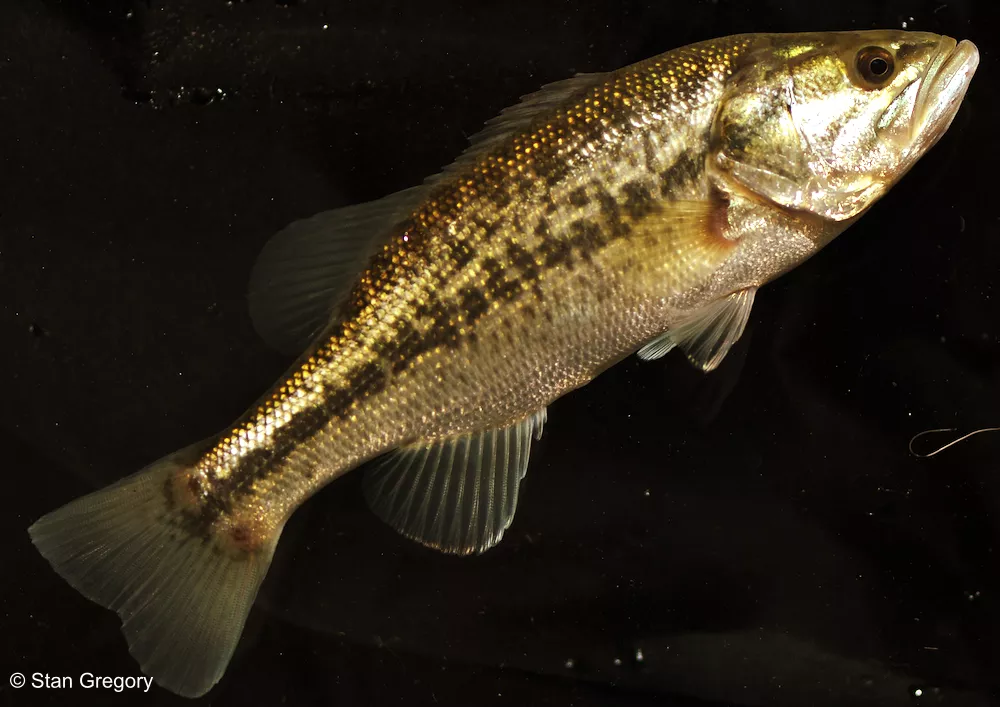


Identification Tips
> Largemouth Bass have an elongated, robust body with a dark green to olive coloration on the back, fading to a lighter yellowish to whitish belly.
> This species can be distinguished from Smallmouth Bass by their upper jaw extending past the rear margin of the eye.
> The dorsal fin of Largemouth Bass is divided into two sections: a spiny front portion and a softer, rayed rear portion. They have a notch or space between both dorsal fins.
> They often have a dark lateral stripe running from behind the gill plates to the base of the tail.
Natural History
> Largemouth Bass are carnivorous, primarily feeding on fish, crustaceans, and amphibians, but they also consume insects and even small mammals.
> Largemouth Bass are known for their "ambush predator" behavior, often hiding in vegetation or structures and striking prey with a quick burst of speed.
> This species spawns in the spring when water temperatures reach 60-75°F (15-24°C).
> Male Largemouth Bass make nests in the gravel or loose sediment in shallow waters. Females lay eggs in several different nests.
> Males protect and fan the eggs, and also guard the fry until they are able to swim and feed on their own.
> Largemouth Bass can live for over 10 years, with some individuals reaching up to 15 years in optimal conditions.
Distribution
> Largemouth Bass are native to the eastern and central United States, from the Great Lakes to the Gulf of Mexico.
> This species has been introduced to many regions worldwide, including the western United States, Europe, South Africa, and Japan, for recreational fishing.
> In Oregon, Largemouth Bass can be found in almost all ponds and lakes and the majority, if not all, rivers that reach temperatures above 60°F (16°C).
> Largemouth Bass are found throughout the mainstem Willamette River and lower portions of tributaries. They occupy sloughs and floodplain habitats to a greater degree than the mainstem, unlike Smallmouth Bass, which prefer main channel habitats.
Size
> Adult Largemouth Bass typically range from 30 to 60 cm (12 to 24 inches) in length, though some can grow up to 75 cm (30 inches).
> They generally weigh between 0.5 to 4.5 kg (1 to 10 lb), with record specimens reaching weights of over 10 kg (22 lb).
Habitat
> Largemouth Bass thrive in freshwater habitats with warm, slow-moving water.
> They prefer lakes, ponds, reservoirs, and river sloughs with submerged logs, rocks, and aquatic plants for cover.
> Largemouth Bass prefer habitats that provide cover for ambushing prey and areas for nesting and spawning.
Diet
> Largemouth Bass are opportunistic feeders, consuming a wide variety of prey items based on availability. They prey on anything that can fit in their mouths.
> Their diet includes fish, crayfish, frogs, insects, and occasionally small birds and mammals.
> Juvenile bass primarily feed on zooplankton and small invertebrates before transitioning to larger prey as they grow.
Management Considerations
> Largemouth Bass was introduced as a game fish. There are no management actions put into place to regulate the species in Oregon. The only practice that could be considered as management is the angling that ODFW encourages, but it is not aimed at reducing their abundance or distribution.
> Stocking programs are used to enhance recreational fisheries, but such programs cause negative impacts on native species and ecosystems.
Similar Species
> Smallmouth Bass, which can be distinguished by their shorter mouth that does not extend past the rear rim of the eye.
References
For more information, see references.